
Linkpool vs Serpzilla: Editorial Matching or Automated Placement?
Linkpool is a backlink marketplace that narrows publisher articles into relevant opportunities for advertisers and publishers to review. Serpzilla also aims to reduce the operational work of link building, but describes an automated marketplace where SEO professionals select promoted pages, specify metrics, choose donor websites and place backlinks through a streamlined system.
Automation can reduce repetitive research and coordination. It can also magnify weak criteria if a team treats filters or recommendations as automatic approval. The useful comparison is therefore not “manual versus automatic.” It is where human editorial judgment enters the workflow and what evidence remains after publication.
Quick recommendation
Choose Linkpool when you want a platform organised around article-level relevance, publisher acceptance or counteroffers and verification of the agreed context. Choose Serpzilla when you want a broad, metric-led link-building platform with automated placement workflows and multiple backlink formats.
Before selecting either, define the destination, target reader, acceptable content, excluded categories, geography, budget and review owner. Automation should operate inside those boundaries, not invent them.

The key question is where editorial judgment enters the route.
Automation should narrow work, not approve it
Serpzilla’s public FAQ describes selecting website pages to promote, funding an account, specifying metrics and choosing donor websites from the resulting options. Its current product information also presents guest posts and link insertions among available formats.
Linkpool uses campaign context and publisher content to propose article-level opportunities. This can narrow the initial research set, but a semantic match is not permission to publish. Advertisers review the source page and destination; publishers decide whether the reference belongs.
Both systems can save time. The risk appears when a team replaces editorial criteria with a metric threshold or relevance score. A high authority number cannot make an unrelated page useful. A convincing AI explanation cannot override the actual article.
Compare the unit of selection
Ask what you are approving: a domain, a donor page, a future article or a specific existing passage. The closer the evidence is to the final placement, the easier it is to evaluate reader value.
Serpzilla presents metric-based donor selection and multiple placement types. Confirm the exact page and format available before purchase. For a guest post, review the planned topic and content responsibility. For a link insertion, review the existing page and proposed context.
Linkpool’s article-level opportunity puts a source page into the conversation earlier. Still check whether the article is current, indexed, editorially sound and genuinely related to the destination. The high-quality placement guide provides a balanced test covering relevance, wording, commercial terms and follow-through.
Build a layered evidence review
Serpzilla says users can specify many metrics to identify websites. Record each metric’s provider, scope and refresh date. Do not treat authority, estimated traffic, age and price as interchangeable measures. Check the real site for subject consistency, authorship, disclosure and outbound-link quality.
Linkpool can show publisher-connected Search Console information when available. Confirm whether it represents the entire property or a URL prefix and whether the visible period is 28 or 90 days. Historical first-party clicks remain evidence, not a forecast.
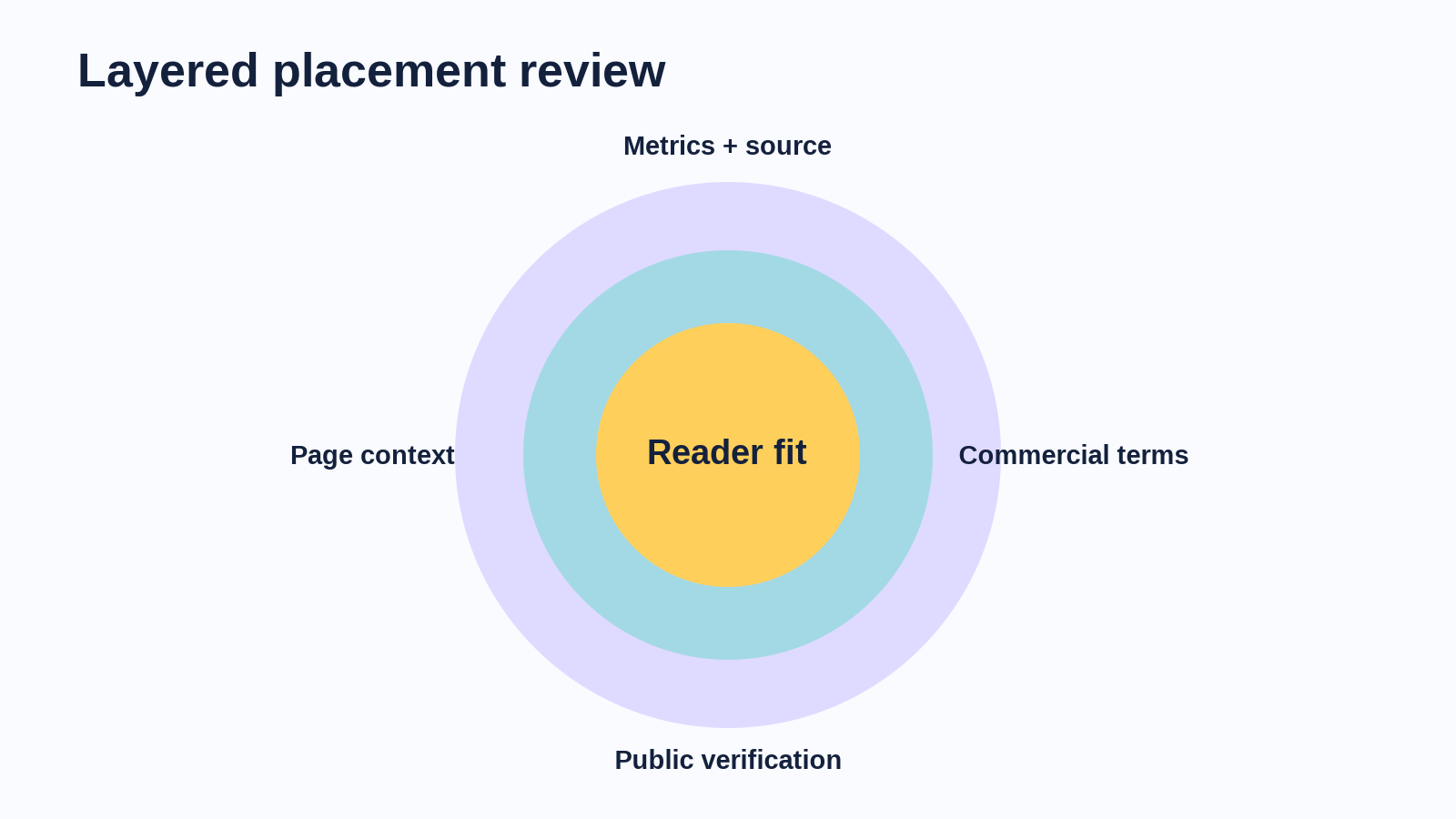
No single metric or model output should approve a placement.
Use the contextual placement approval checklist for every candidate, regardless of how the platform found it. This makes decisions comparable and prevents a tool-specific screen from becoming the entire audit record.
Compare placement formats carefully
Serpzilla publicly describes guest posts and link insertions, including advertiser-supplied or publisher-written articles. Each format creates different work and risk. Confirm who writes, who edits, how many links are allowed, what disclosure is required and what happens when the publisher rejects or revises the material.
Linkpool is focused on relevant opportunities within publisher content. The proposed text should add information and accurately describe the destination. The publisher should be able to rewrite, counter or decline without pressure.
For either workflow, avoid exact-match anchors that distort the sentence. Review campaign-wide patterns with the contextual anchor-text guide and keep brand, URL and descriptive language natural.
Pricing models can change the maintenance burden
Serpzilla’s public materials describe one-time guest-post options and also refer to ongoing link arrangements in parts of its service. Confirm the payment model attached to the exact placement. A one-time publication price, a recurring rental-style link and a contextual placement with an expected duration are not directly comparable.
Linkpool’s opportunity records the proposed price and lets the publisher accept, counter or reject. Before approval, confirm commission, publisher earnings, expected duration, payment release and the procedure for later changes.
Normalize writing, editing, publication, revisions, platform charges, taxes, monitoring and internal labour. The 2026 link insertion pricing guide explains why page fit and editorial effort belong in the cost calculation.
Put guardrails around scale
Automation makes it possible to review or place more links. That is not automatically a campaign advantage. Set limits on topics, countries, destination pages, monthly spend and the number of simultaneous placements. Require human approval for every source page and final context.
Avoid abrupt volume that your team cannot quality-check. Maintain a central ledger so the same publisher is not approached through several tools. Respect publisher opt-outs and prevent repeated requests after a decline.
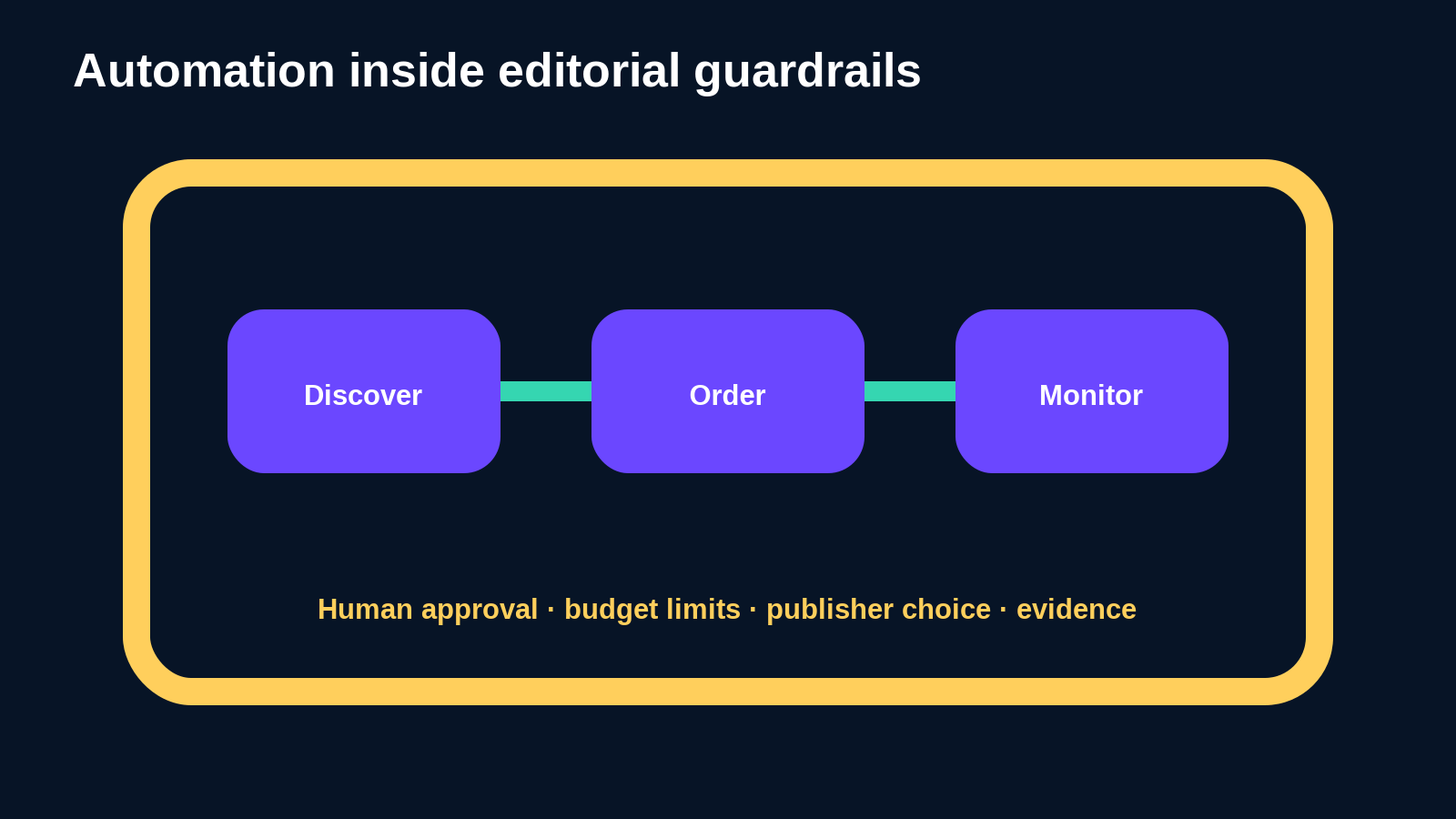
Scale only the work your team can still verify.
Verify the public outcome
Serpzilla describes automated placement and refund conditions for certain missing or unindexed links. Linkpool emphasises verification before completing the agreed placement. Read the current terms for the exact product and do not generalise one guarantee across every format.
Open the final URL while signed out. Confirm accessibility, source content, destination, anchor, disclosure and link attributes. Store the approval record and verification date. If the placement is expected to remain live, schedule checks using the post-publication monitoring workflow.
Indexation is not the only quality test. A page can be indexed and still be irrelevant, misleading or inaccessible to the intended audience. Conversely, temporary indexing changes do not automatically prove that a publisher violated an agreement.
Run a controlled evaluation
Use the same destination and campaign boundaries in both systems. Review a fixed number of candidates and measure how many survive page-level checks. Track research time, suitability, price clarity, publisher communication, revision effort and verified outcomes.
Then test maintenance. Can your team locate every live placement, its terms and the next check date? Operational clarity after publication matters as much as speed before it.
Final recommendation
Linkpool fits agencies that want relevance-led article opportunities, visible publisher decisions and a structured verification step. Serpzilla fits teams seeking a broad, automation-oriented platform with metric-led donor selection and several link-building formats.
Neither is a substitute for editorial policy. The sustainable choice is the workflow that lets your team reject weak candidates, preserve publisher control and verify every public result without losing track as volume grows.
Frequently asked questions
Is Serpzilla fully automatic?
Serpzilla publicly describes automated backlink placement, but users still select promoted pages, criteria and donor websites. Human review remains necessary for relevance and editorial quality.
Does Linkpool use automation?
Linkpool uses matching to identify potential article-level opportunities. Advertisers and publishers still review and decide; a suggested match is not automatic approval.
Which platform is better for agencies?
It depends on the campaign and operating model. Test candidate quality, review time, available formats, commercial terms, publisher control and verified outcomes with the same brief.
Can either platform guarantee SEO results?
No responsible platform comparison should promise ranking or traffic outcomes from a placement. Evaluate relevance, transparency, editorial usefulness and verifiable delivery.