
After a Link Goes Live: Monitor the Placement and Record Changes
Once a link placement is live, save the agreed delivery record and check the actual public article. Confirm its URL, the destination behind the link, the surrounding sentence, and the appropriate sponsored treatment. Revisit those details when the page or campaign changes, and record any issue with enough evidence for the publisher to act.
A backlink marketplace can organize the original request and delivery workflow. Linkpool's public process holds the agreed payment while the publisher completes the work and checks the submitted link before settlement. The monitoring routine below is an agency or publisher recordkeeping practice you can carry out with an ordinary browser and a shared document.
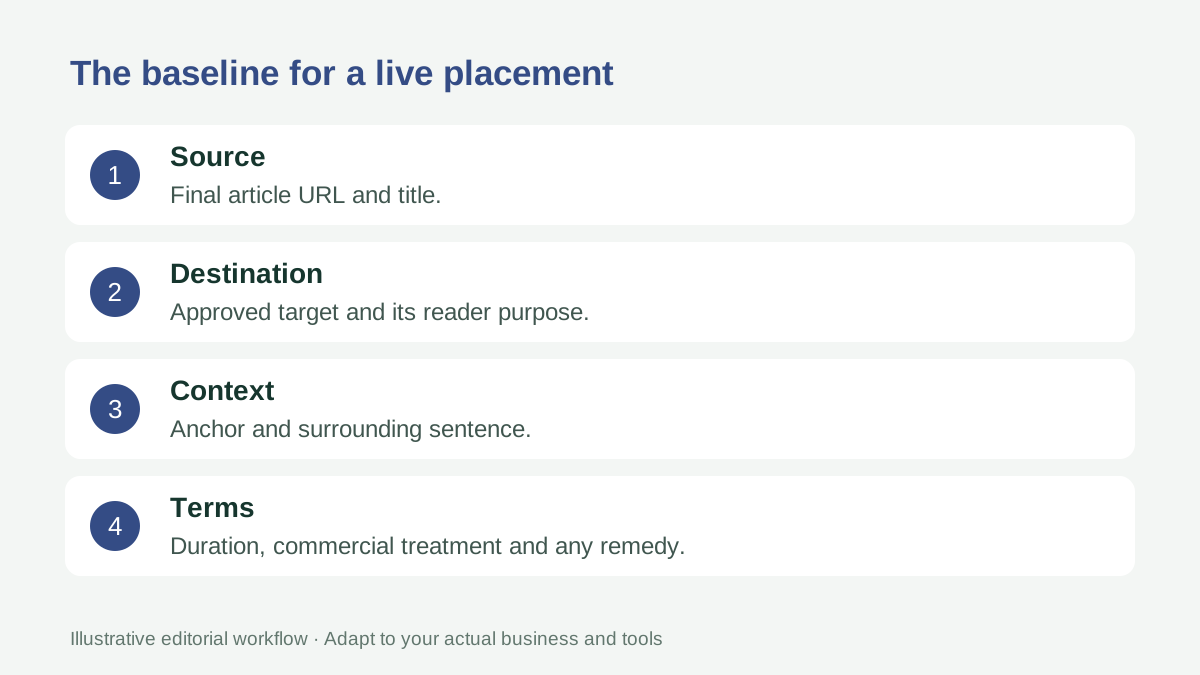
Keep the agreed record beside your live checks.
Save a useful baseline at delivery
Record the final public article URL, its title, the approved destination, the anchor wording, and the sentence containing the reference. Add the date of your check and the relevant request identifier from your own records.
Include the agreed duration, any replacement terms, and the publisher's commercial disclosure policy where these were established. Keep the original agreement accessible. If a detail was never agreed, raise it as an open question rather than quietly adding a promise to the delivery record.
The contextual placement approval checklist covers the earlier decision. At this stage, your job is to compare the public delivery with the approved record and preserve a clear reference for later changes.
Open the page as an ordinary visitor
Load the final article while signed out. Check the actual page after redirects and confirm that the relevant content is accessible. A screenshot from the publisher can support your record, but a repeatable public check gives you a stronger basis for investigating a problem.
Pay attention to the final destination of an article redirect. A redirect to the same article under a new URL may be a routine migration. A redirect to a homepage or unrelated resource changes the visitor experience and needs a closer review.
If the page briefly fails to load, record the time, response, and conditions of the check. Repeat the check before treating a transient error as removal. Keep the symptom specific: “article returned a missing-page response at this time” is more useful than “the link is broken.”
Follow the placed link through to the destination
Inspect the actual destination behind the reference, then open it. The visible anchor may remain unchanged while the target URL has been altered. A campaign's own redirects can also change what a visitor receives.
Confirm that the destination still fulfils the sentence's promise. A link described as a practical guide should continue to reach a useful guide. If the target has become a sign-in page, an expired offer, or an unrelated product, the surrounding reference may need review.
Keep destination changes in your campaign record. When your own team changes a target, assess the effect on existing placements before redirecting everything to a new sales page. The publisher approved a particular editorial context, and a material change may require a fresh discussion.
Re-read the surrounding paragraph
Content can change without removing the link. A publisher may revise an article, reorder sections, or shorten a paragraph. Read enough of the current text to understand whether the reference still belongs.
Check that the wording accurately describes the destination and remains coherent in the paragraph. If a later edit turns a neutral reference into an unsupported endorsement, raise the exact sentence as the issue. If the article's subject has substantially changed, review the fit again.
Our guide to high-quality contextual placements explains the reader-fit principle. That judgment remains relevant after publication because both the source article and the destination can evolve.
Review the commercial treatment
For a paid placement, keep the publisher's disclosure and link-qualification decisions in the delivery record. Google's outbound link guidance recommends the sponsored value for paid links and also accepts nofollow for that purpose.
Inspect the actual link attribute when it is part of your review. Ordinary browser developer tools or page source can help establish what the delivered link contains. Record the value you observed rather than guessing from how the link looks.
A sponsored or nofollow attribute is compatible with a properly qualified paid reference. Do not treat removing that qualification as a maintenance improvement. The placement should serve readers and respect the publisher's commercial treatment throughout its agreed life.
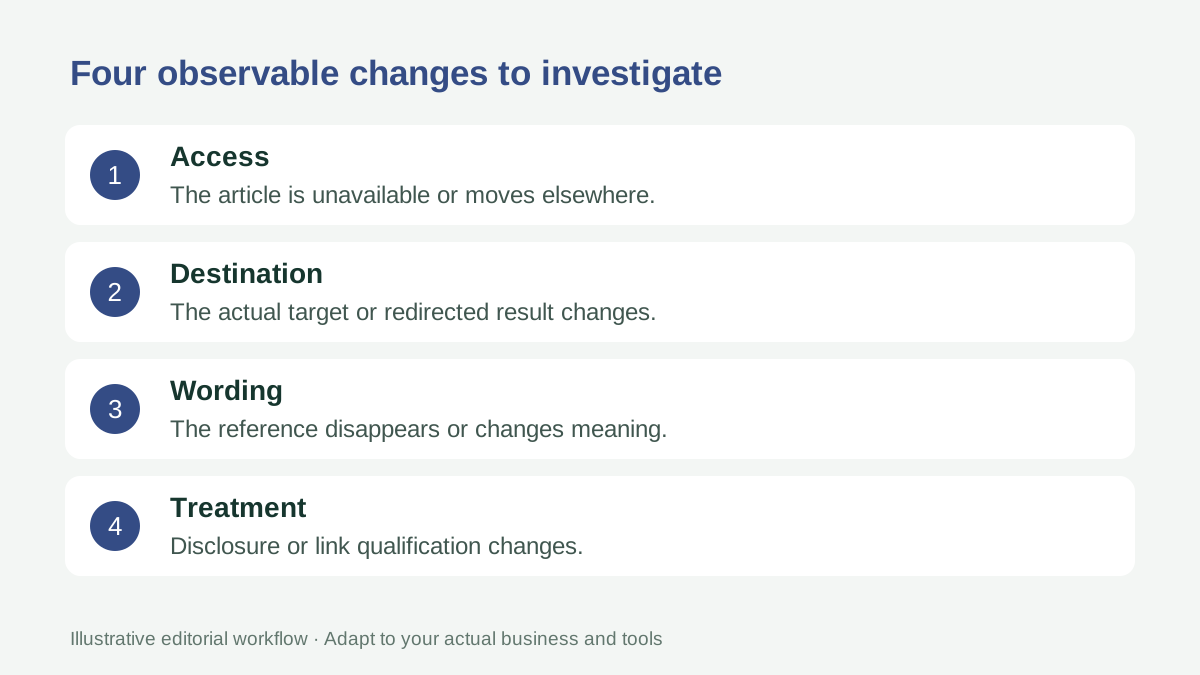
Describe the specific change before deciding what remedy is appropriate.
Use a review cadence that has a reason
Choose a review frequency based on the campaign's value, the agreed placement terms, the likelihood of page changes, and the cost of missing a problem. Record the next review date in the same document as the baseline.
Also review after a known site redesign, article migration, campaign destination change, or publisher notification. Those events provide a concrete reason to inspect the reference even if the next routine check is weeks away.
Avoid collecting a long list of unexplained alerts. A useful review identifies a condition that a person can verify: the article became inaccessible, the destination changed, or the approved reference disappeared. Keep cosmetic page changes separate from changes that affect the placement.
Make the issue report easy to resolve
When something changes, prepare a short evidence note with the source URL, the relevant request or agreement, the exact observed issue, and the time of the check. Add a screenshot or excerpt where it clarifies the problem.
State the requested correction in terms of the agreement. For example, ask the publisher to confirm a replacement article URL after a migration, or to restore the agreed destination if it was accidentally altered. Give the publisher enough context to reproduce the observation.
Keep a record of the response and the next action. The contextual placement workflow guide explains the original request and verification stages. Any later correction should follow the applicable agreed terms and supported process rather than an invented refund or permanence guarantee.
Separate maintenance from campaign results
A maintenance check can establish whether the delivered reference remains present and useful. Referral visits, enquiries, and wider search trends answer other questions about the campaign.
Where your measurement tools provide those outcomes, record them with the period and limitations of the data. The guide to reading Search Console traffic explains why clicks, impressions, CTR, and position need context.
Avoid attributing a ranking change to one placement simply because the dates are close. Keep the operational record accurate and evaluate campaign outcomes with the broader evidence available to you.
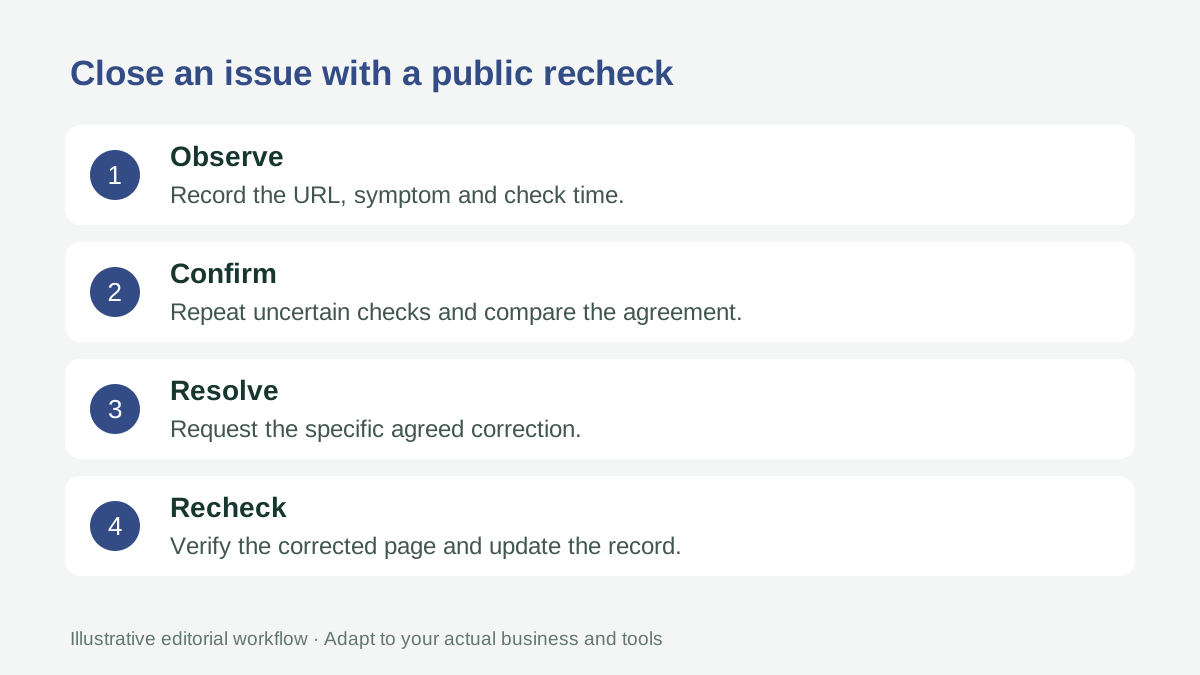
Close an issue only after checking the corrected public result.
A minimal record you can copy
Use one row per placement with fields for source URL, target URL, anchor, agreed duration, observed commercial treatment, delivery check date, last review date, next review date, issue, and responsible person.
Attach the approved context or agreement to that row. When an issue is resolved, record what changed and verify the live page again. Preserve the original baseline so future reviewers can understand the history.
This lightweight routine gives agencies and publishers a common factual reference. Its value comes from clear observations and timely follow-through, not from the number of fields in the spreadsheet.
Frequently asked questions
Does a live link prove the article is indexed?
No. Public availability and search-engine indexing are separate observations. A live-page check confirms what a visitor can access at that moment.
How often should I check a placement?
Choose a cadence that fits its value, terms, and change risk. Add a review after known migrations, redesigns, or destination changes.
What if the publisher changes the article URL?
Open the new URL and review the redirect, content, reference, and destination. Update the record if the change preserves the agreed delivery; raise a specific issue if it does not.
Does Linkpool verification promise permanent monitoring?
Use the currently documented request and verification process for the platform workflow. Treat this article's ongoing review record as your own operational practice, and establish any duration or remedy through the applicable terms.