
White-Label Link Building Workflow: Agency QA and Reporting
White-label link building works when an agency keeps strategy and client communication in-house while using a specialist or backlink marketplace for part of the research, publisher coordination, or placement workflow. The agency still owns the brief, approval rules, quality decision, and final report.
The short answer: separate the work into six gates—client brief, candidate review, publisher approval, publication, independent verification, and client reporting. Do not count a pitch, accepted request, or dashboard status as a live placement. Count only a public page that matches the agreed context and has been checked.
“White label” should mean the agency controls presentation and communication. It should not mean the source page, price, link treatment, or delivery record becomes impossible to inspect.
Decide what stays with the agency
Write down which decisions cannot be delegated. The agency should normally retain the client relationship, target-page priorities, risk tolerance, prohibited topics, approval policy, anchor governance, and reporting narrative.
Execution can be shared. A marketplace can help surface relevant publisher articles, record a request, keep commercial terms together, and support verification. A specialist may handle research, outreach, writing, or publisher coordination. The exact split matters less than having one named owner for every decision.
Use the agency guide to relevant opportunities to define the campaign before reviewing inventory. If the destination, intended reader, language, market, and excluded subjects are unclear, more candidates usually create more review work rather than better choices.
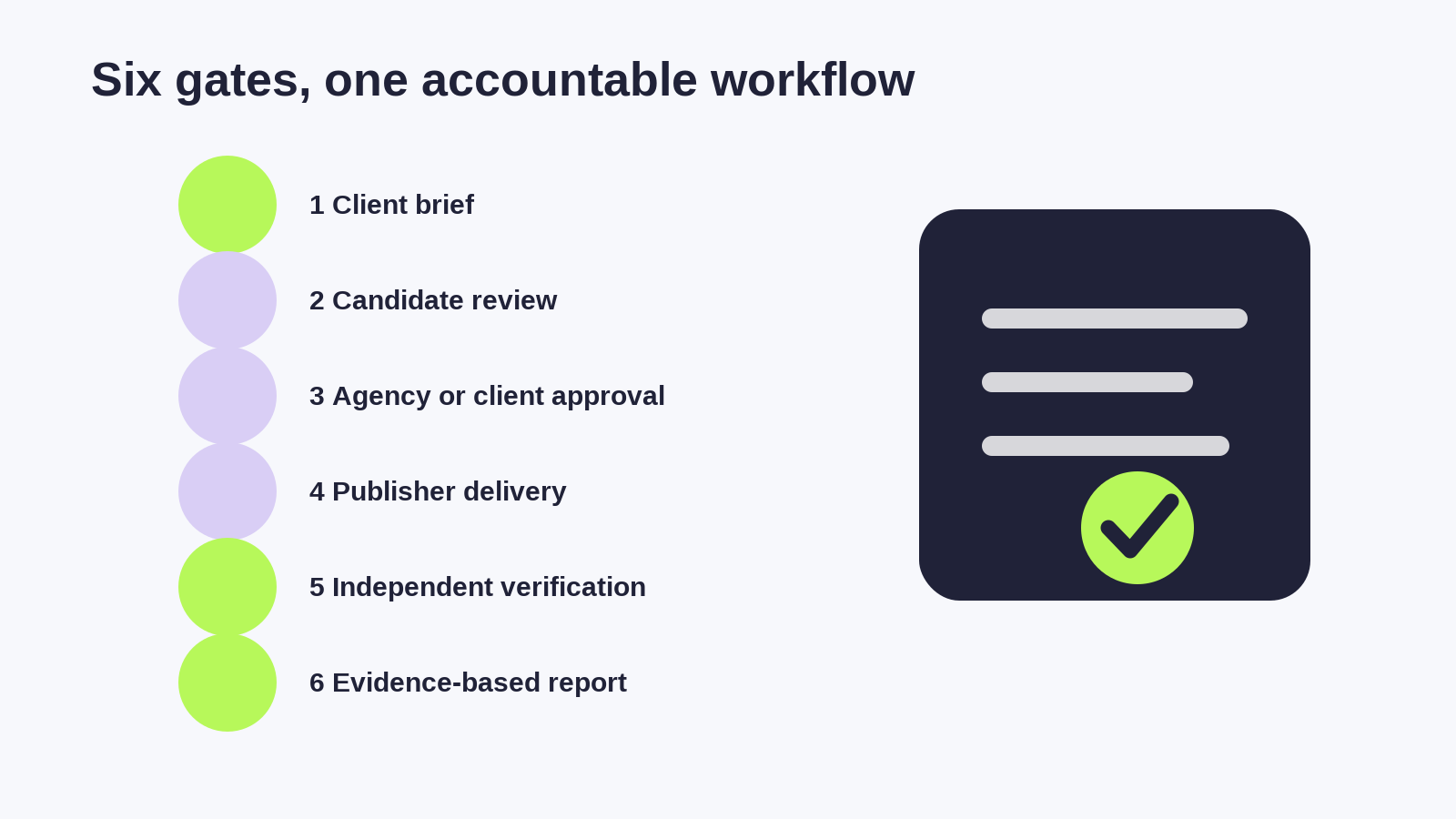
Keep approval gates visible even when research or publisher coordination is outsourced.
Build one brief per client
A reusable brief prevents standards from drifting across accounts. Record:
- approved destination pages and the reader each page serves;
- acceptable subjects, languages, markets, and exclusions;
- preferred and prohibited anchor patterns;
- minimum evidence required before approval;
- budget range and who can approve an exception;
- disclosure and link-attribute requirements;
- expected delivery record and review date.
Do not turn authority scores into the whole brief. They can help screen candidates, but the exact article, reader fit, traffic evidence, editorial condition, and terms still need review. The backlink quality metrics guide explains how to keep page evidence, site signals, and price in their proper roles.
Put approval before commitment
The agency or client should know what is being approved. A domain-only list is not enough when the delivery is supposed to be a contextual addition to an existing article.
For each candidate, capture the source URL, article topic, destination, suggested section, possible wording, anchor, observed traffic source and date, price, duration, and commercial treatment. Mark unknown fields as unknown instead of replacing them with zero.
| Gate | Approval question | Reject when |
|---|---|---|
| Reader fit | Would the reference help here? | The sentence has no useful purpose |
| Destination | Does the target fulfil the wording? | The claim exaggerates the page |
| Evidence | Are metrics labeled by source, scope, and date? | One domain score is treated as proof |
| Terms | Are price, work, duration, and revisions clear? | Conditions appear after payment |
| Policy | Are disclosure and attributes agreed? | Someone requires misleading treatment |
The contextual placement approval checklist provides a fuller review. Use the same standard whether a candidate came from outreach, a vendor, or software.
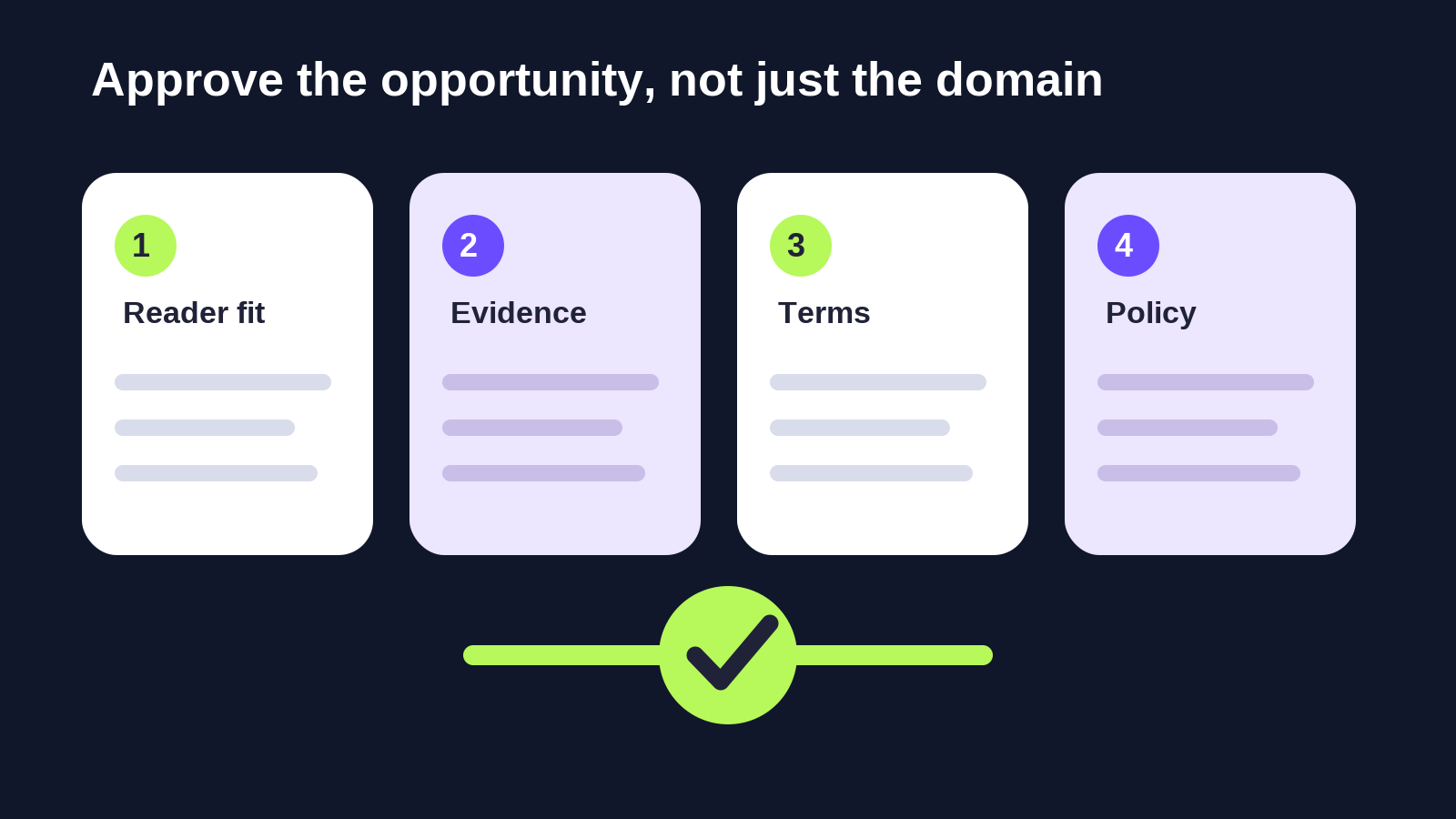
Approve the exact opportunity, not a domain detached from its final context.
Keep commercial records client-specific
Give every request a client code and campaign code. Store the destination, proposed source, approved maximum, approver, and date with that identifier.
Linkpool’s public pricing currently describes a free account with no monthly fee for advertisers, prepaid credits where one credit equals US$1, and payment held until Linkpool checks the submitted link. Its public workflow centers on agreeing the article, wording, and price before publication. Confirm the current on-screen terms for each request; do not copy a general pricing statement into a client contract as a permanent guarantee.
The marketplace record coordinates the placement. The agency ledger connects that work to client authorization, internal margin, reporting period, and follow-up owner. Keep both reconciled.
Verify independently before reporting
An accepted, paid, submitted, or complete status is not the same as a verified result. Open the source page while signed out and check:
- the page is public and accessible;
- the anchor and surrounding sentence are accurate;
- the destination resolves to the approved page;
- disclosure and link attributes match the agreement;
- the article remains coherent;
- the publication or change date is recorded accurately;
- screenshots support, but do not replace, the live URL.
Save the verification time and checker. If the placement has a duration or monitoring condition, assign a future owner. The post-publication monitoring workflow shows how to preserve the original delivery while recording later changes.
Create two views of the same evidence
The internal view should include supplier or marketplace reference, cost, margin, negotiation notes, exceptions, approvers, failed checks, and remediation history.
The client view should be concise but verifiable: public source URL, destination, published anchor, article topic, go-live date, verification date, and a note about link treatment. Show metrics only with provider, scope, and observation date.
Do not report “five links delivered” when two await publication and one failed verification. Separate proposed, approved, in progress, live and verified, changed, and closed states. This prevents accepted opportunities from inflating totals and explains work moving into the next period.
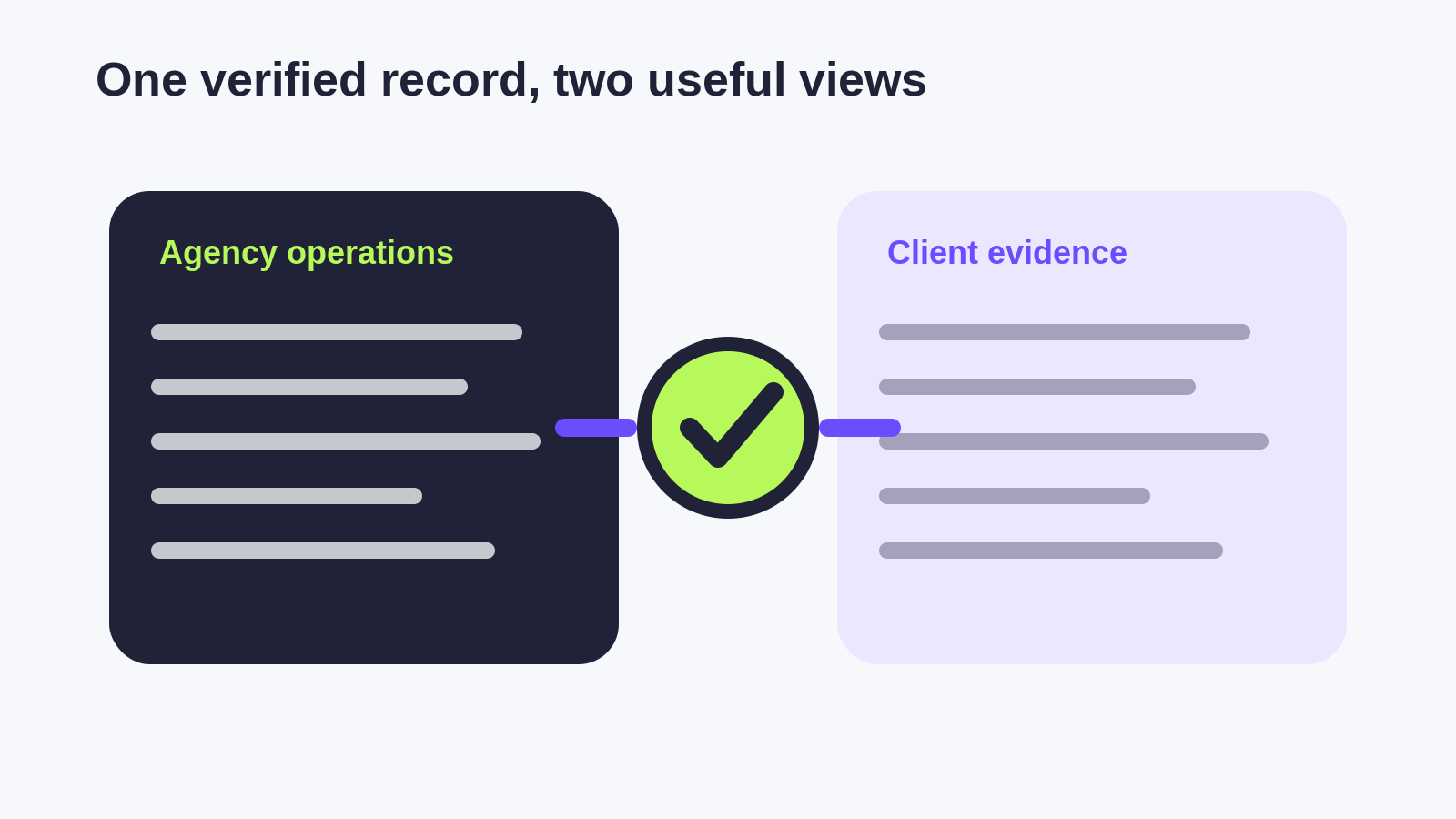
Use one checked evidence record to produce both the operations view and the client-facing report.
Protect confidentiality without creating blind spots
Limit collaborators to the accounts they need. Check exports for hidden tabs, comments, copied examples, file properties, or links that reveal another client. Remove internal pricing and supplier notes from the client view, but retain them in the controlled agency record.
Do not remove facts needed to verify delivery. The public URL, destination, anchor, date, and observed link treatment should remain visible. A white-label report can omit the fulfillment brand while accurately showing what became public.
Run a small pilot before scaling
Test the full workflow with one client, one destination, and a small batch. Measure review time, rejection reasons, clarity of terms, revision effort, verification failures, and reporting effort.
The aim is not to prove rankings from a handful of links. It is to learn whether the process produces relevant, transparent, auditable work. A strong pilot ends with a record another colleague can understand without reading the original inbox thread.
Frequently asked questions
What is white-label link building?
It is an arrangement in which an agency sells and manages link-building work under its own brand while a specialist, publisher network, or marketplace supports execution. The agency remains responsible for its promises, approvals, and reporting.
Can an agency use Linkpool as a white-label client portal?
Linkpool’s public pages describe advertiser and publisher marketplace workflows, not a branded client-reporting portal. An agency can use marketplace records internally and create its own report from verified evidence without claiming an unsupported portal feature.
What should a white-label placement report include?
Include the live source URL, destination, published anchor, article topic, publication date, verification date, observed link treatment, and any metrics with their source and date. Separate live placements from proposed or accepted work.
Who should approve the publisher and source article?
Define the rule with the client before the campaign. A higher-risk client may approve every candidate; another may delegate approval within written criteria and receive exceptions for review.
Should white-label link building guarantee rankings?
No. An agency can guarantee its process, documentation, and agreed remediation steps, but rankings, traffic, indexing, and AI citations depend on systems outside one placement workflow.
How many placements should a pilot include?
Use the smallest batch that exercises briefing, review, approval, publication, verification, and reporting. The goal is to test the workflow, not manufacture a large delivery total.