
Link Insertion Pricing 2026: What Should a Backlink Cost?
A useful link-placement price starts with the article, not a generic rate card. A large 2026 BuzzStream study found an average insertion price of $179, but the same study also showed that stronger inventory was scarce. That makes $179 a useful market reference, not a universal target.
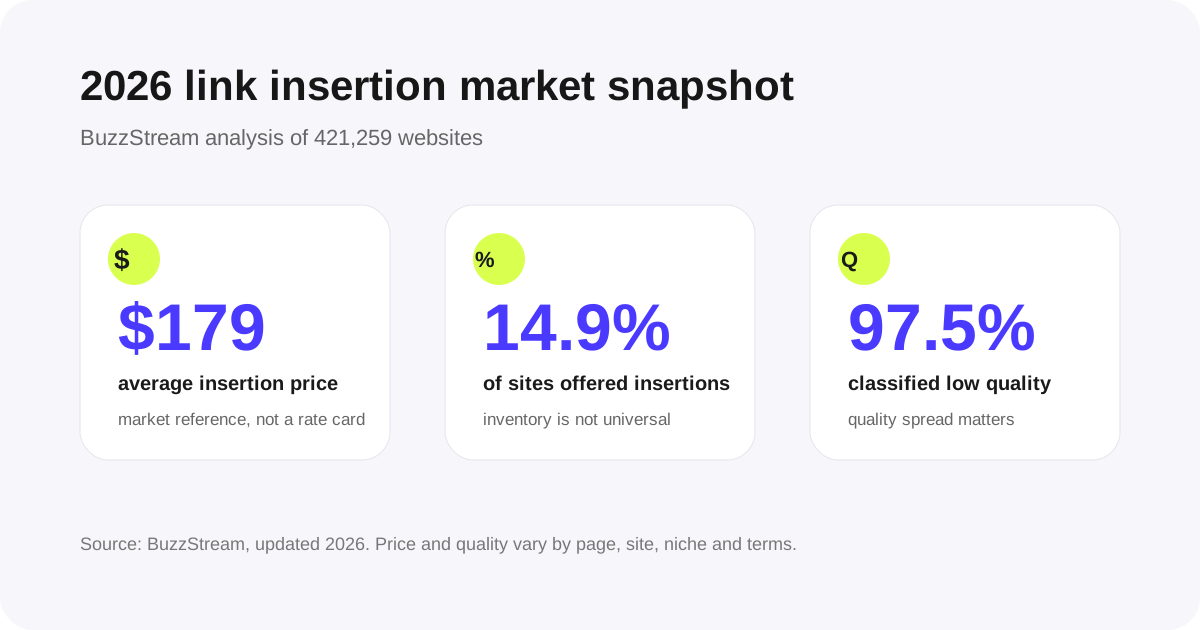
Figure 1. A market average is context, not a rate card. Source: BuzzStream's 2026 link insertion study.
Start with editorial fit
A commercial placement should still help the reader. Before discussing price, check whether the target resource genuinely belongs in the source article. Our guide to high-quality contextual placements uses four practical questions: is the article relevant, does the destination add information, can the anchor read naturally, and would the sentence still make sense without the commercial relationship?
If the fit is weak, a low price does not make the opportunity stronger.
Use article-level visibility
Domain-level authority can be useful for screening, but the placement lives on one page. When first-party data is available, article-level Search Console metrics can show whether that page already receives search impressions and clicks.
Compare a recent 28-day window with a broader 90-day view rather than relying on one short spike. Look at clicks, impressions, CTR and average position together. Our guide to reading Google Search Console traffic explains what those metrics can and cannot show.
A page with modest but relevant search demand may be more useful than a high-authority domain where the proposed article has no measurable visibility.
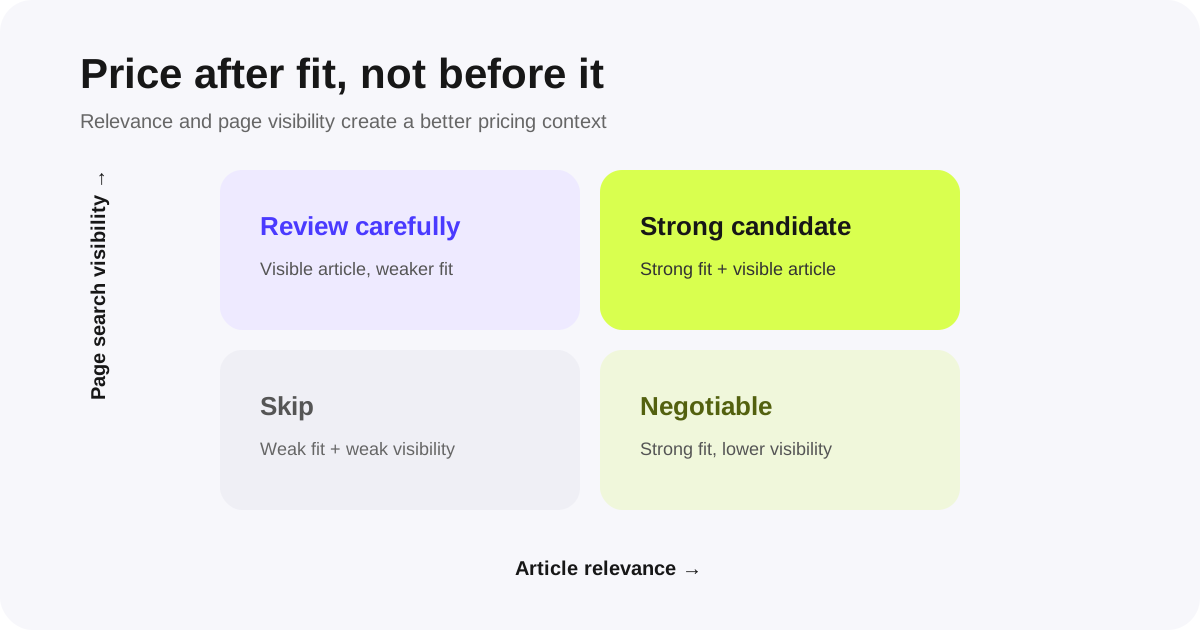
Figure 2. Review relevance and article visibility before comparing quotes.
Treat authority as supporting evidence
Third-party authority metrics such as Domain Rating can help compare websites, but they should not become a mechanical price calculator.
A practical review combines several signals:
| Signal | What it helps answer |
|---|---|
| Article relevance | Does the placement make editorial sense? |
| Page-level GSC data | Does the article receive Google visibility? |
| Domain authority | How strong is the wider site comparatively? |
| Publisher price | What is the commercial ask? |
| Placement terms | What is actually included? |
No single column answers the whole question.
Price the editorial work
A responsible publisher still has work to do: review the destination, check the suggested wording, protect the article's tone, publish the change, and maintain the placement under the agreed terms.
Before comparing two offers, advertisers should understand the practical terms. How long is the placement expected to remain live? Can the publisher edit the sentence? What happens if the destination changes or the link breaks? How is the final public placement verified?
A lower quote with unclear terms may create more work later.
Account for niche scarcity
Some campaign topics have abundant publisher supply. Others do not. A narrow B2B category may have only a few genuinely relevant articles.
A clear advertiser campaign brief makes scarcity easier to judge because it defines the audience, destination page, topic and budget before opportunities are reviewed.
That is another reason a broad market average cannot tell you the right price for a specific campaign.
A five-step pricing review
A simple order of operations keeps price from overpowering quality:
- Editorial fit: reject weak relevance first.
- Article visibility: review page-level search data when available.
- Site quality: use authority and broader traffic as supporting evidence.
- Commercial terms: confirm duration, wording and verification.
- Price: compare the quote after the first four checks.
This order also helps publishers. If an article has demonstrated demand, strong topical fit and requires careful review, the publisher has a clearer basis for setting a minimum.
What Linkpool's 20% commission means
Linkpool's current marketplace model uses a 20% platform commission, with 80% of the accepted placement amount allocated to publisher earnings.
If an accepted placement is $250, the publisher's marketplace earning is $200 and the platform commission is $50.
That split is separate from the editorial valuation question. The publisher still decides what the placement is worth, and the advertiser still decides whether the article is worth the total quote.
A backlink marketplace is most useful when both sides can review the same campaign context, article opportunity, traffic signals, price, negotiation state and publication status rather than reducing the decision to a spreadsheet of domains.
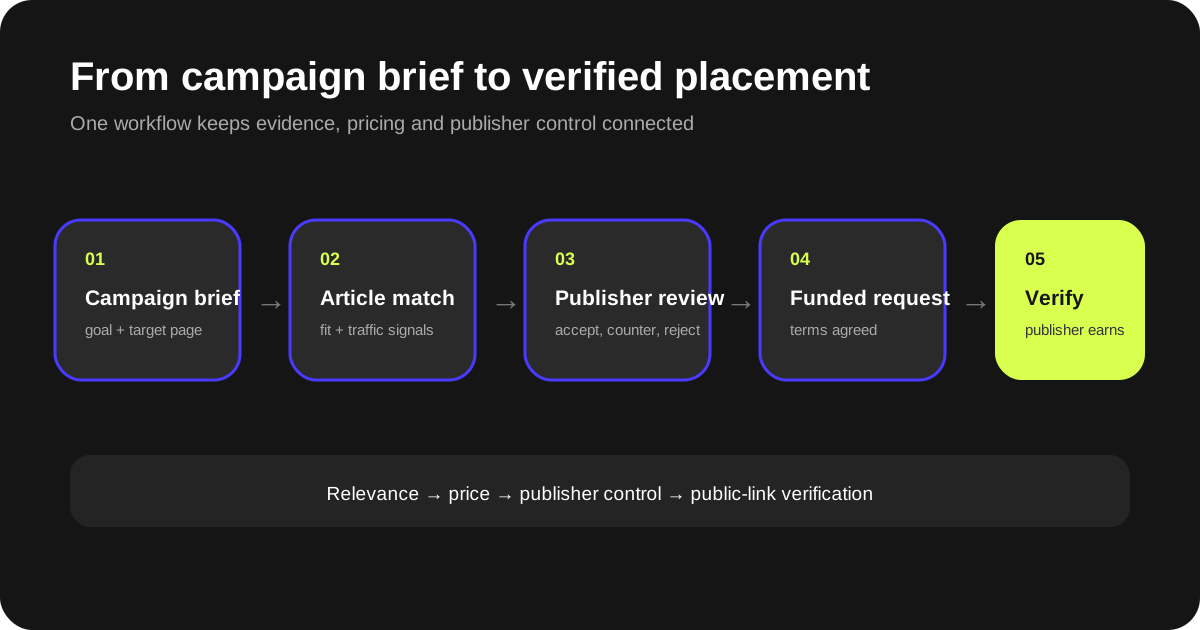
Figure 3. Linkpool keeps campaign context, publisher review, commercial terms and verification connected.
Transparency matters
Commercial placements should not be presented as guaranteed search results. Google publishes separate guidance for commercial and sponsored links, and publishers should keep their own editorial and disclosure policies clear.
Linkpool does not promise a ranking outcome. The parts of the workflow that can be verified are the campaign, proposed article, agreed terms, public placement and publisher completion status.
Use $179 as a reference, not a target
BuzzStream's 2026 dataset is useful because it shows how wide the market can be. The important lesson is not that every insertion should cost $179. It is that average price alone cannot tell you whether the underlying article is useful.
For advertisers, pay for fit rather than inventory volume.
For publishers, set a minimum that reflects editorial review, article visibility and the value of the content rather than copying a generic market average.
The best price is one both sides can explain from evidence.
FAQ
What is the average link insertion price in 2026?
BuzzStream's 2026 analysis found an average of $179 across the insertion-priced sites in its dataset. Treat that as a market reference rather than a universal rate.
Is Domain Rating enough to set a link placement price?
No. Authority can support a pricing decision, but article relevance, page-level visibility and commercial terms matter too.
Can Google Search Console help evaluate an article?
Yes. When a publisher shares appropriate first-party data, page-level clicks and impressions can show whether the exact article has search visibility. They do not guarantee future performance.
How much does a publisher earn on a $250 Linkpool placement?
Under Linkpool's current 20% platform commission model, an accepted $250 placement allocates $200 to publisher earnings and $50 to the platform commission.
What should advertisers compare before choosing a placement?
Compare article relevance, page-level visibility, site quality, the publisher's commercial terms and the total quote. Price should be reviewed after fit, not before it.