
Linkpool vs Linktopia: Paid Marketplace or Earn-to-Spend Community?
Linkpool is a backlink marketplace that connects advertiser campaigns with relevant publisher articles, lets publishers accept, counter or decline, and structures payment around the agreed placement. Linktopia also organises article-level backlink opportunities, but uses a community model where members submit blog articles, give links to earn credits and spend credits when requesting links from other members.
The choice is not simply cash versus credits. Teams should compare how opportunities are discovered, how value is assigned, whether both parties retain editorial control, how reciprocal patterns are avoided and what evidence confirms that a placement was delivered correctly.
Quick answer
Choose Linkpool when you want a platform centred on advertiser campaigns, article-level matching, publisher negotiation and a payment-backed verification workflow. Choose Linktopia when you want to participate in a founder-oriented community, contribute links from your own articles and use earned or purchased credits to request placements.
Both models still require human review. A credit value cannot establish relevance, and a proposed price cannot make an awkward insertion useful. Read the source article, open the destination and approve only wording that improves the page for its audience.

The commercial models differ, but both finish with an editorial decision.
Start with your operating model
Linktopia’s public workflow asks members to register, submit blog articles, search opportunities by keyword and send or receive backlink requests. Publishers can approve or reject incoming requests and earn credits after fulfilling accepted orders. Advertisers spend credits to request links.
Linkpool starts with the advertiser’s client, destination and campaign goal. The system identifies potentially relevant publisher articles, after which the advertiser and publisher review the opportunity, wording, price and completion evidence.
A community model can suit a company that owns useful content and is willing to review requests for other members. A paid marketplace can suit an agency that needs a direct campaign budget, distinct client records and publisher prices. The better fit depends on available editorial capacity, not only the nominal cost of a link.
Compare how discovery begins
Linktopia lets members search its article database by keywords. This gives the requester direct control over exploration and can surface opportunities among participating startup and founder blogs. Keyword search is a starting filter; reviewers still need to read the full article and judge whether the destination fills a real information gap.
Linkpool uses campaign context to retrieve and rerank relevant publisher articles. This can reduce manual catalog browsing, especially for a specific product page or guide. Matching is also only a starting point. A relevance explanation must be checked against the live article, and the publisher makes the final decision.
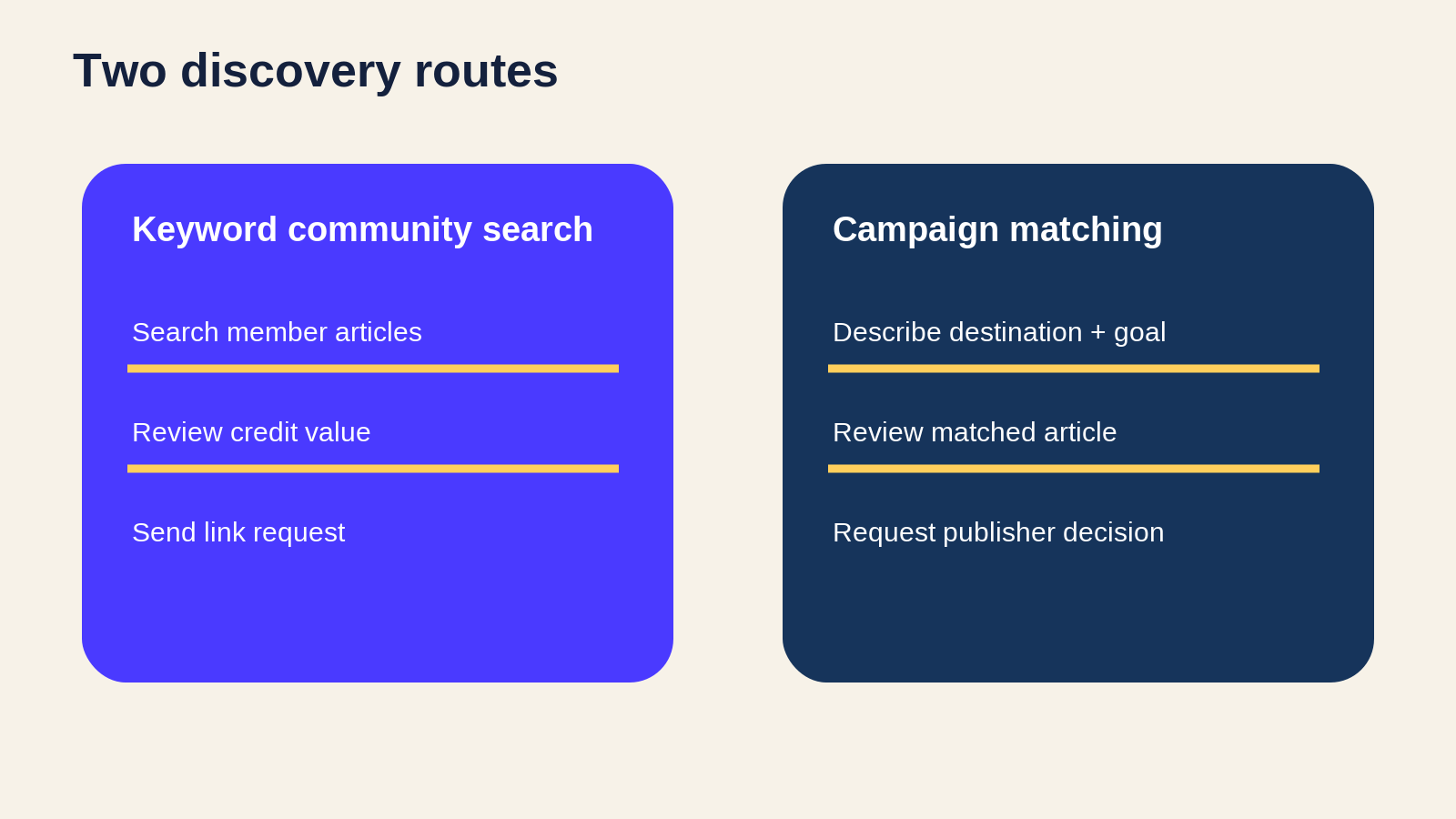
Search and matching narrow the field; neither approves the final placement.
The guide to how contextual link placements work explains the shared steps after discovery: inspect the source, propose a useful addition, disclose the commercial relationship and verify the public result.
Credits and cash express value differently
Linktopia publicly describes an earn-to-spend system. Members earn credits by placing requested links and spend credits when requesting their own. Its site says one credit equals one US dollar when credits are bought or sold. It also describes a suggested “Link Juice Value” based on factors such as Domain Rating, estimated traffic and external links, while allowing publishers to set their own article credit values.
Linkpool uses dollar prices attached to opportunities. Publishers can accept a proposed amount, counter or decline. The record can therefore reflect campaign budget, publisher effort, platform commission and expected placement terms without requiring the publisher to earn purchasing power through separate outbound placements.
Neither valuation should be treated as an SEO outcome forecast. Authority metrics, traffic estimates, external-link counts, publisher effort and contextual relevance are different inputs. The link insertion pricing guide provides a way to record them without turning one formula into a universal price.
Measure the real cost to your team
A credit earned through publishing is not free. The publisher spends time reviewing the destination, editing the paragraph, documenting the change and monitoring the article. A paid placement also carries internal costs for research, approval, communication and verification.
For Linktopia, count subscription cost where applicable, credits spent, credits earned, editorial hours and the opportunity cost of using your own content inventory. For Linkpool, count publisher price, platform charges, review time and any content work. Keep the calculations in a consistent currency and time period.
Do not approve lower-quality placements merely to use an existing balance. A credit or wallet balance is a payment tool, not an editorial reason.
Protect editorial independence
Linktopia says publishers may approve or reject incoming requests. Linkpool lets publishers accept, counter or reject opportunities. In either workflow, the publisher should see the destination, proposed wording, commercial context and expected terms before deciding.
Review the entire source article. The new sentence should be accurate, proportionate and useful without implying an endorsement that the publisher did not make. Avoid forced anchors and unsupported claims. The contextual anchor-text review helps teams test sentence fit and destination accuracy.
Publisher control should continue after acceptance. The publisher may need to revise the wording for house style, reject a changed destination or remove an addition that later becomes misleading, subject to the agreed commercial process.
Watch for reciprocal and network patterns
An earn-to-spend community naturally involves members both giving and receiving links. That does not mean every transaction is a direct reciprocal exchange, but teams should monitor campaign-wide patterns. Avoid arranging “you link to me and I link to you” pairs as a default tactic. Do not build closed loops among the same small group of domains or publish many unrelated commercial references in a short period.
A paid marketplace has a different economic structure, but it also needs safeguards. Payment should never override relevance, disclosure or publisher policy. In both models, maintain a central ledger of source domains, destinations, dates, anchors and commercial treatment.
Search-engine guidance and applicable advertising rules should inform disclosure and link qualification. The platform does not replace the publisher’s responsibility for the final page.
Evidence and opportunity review
Linktopia describes manual vetting of opportunities and a value estimate using domain and page-related factors. Confirm what the current member interface shows, when figures were refreshed and what the vetting covers. Manual admission can reduce obvious spam without guaranteeing that every article is suitable for every campaign.
Linkpool can display publisher-connected Search Console evidence when available. Confirm the property scope and reporting window. First-party clicks are useful historical evidence, but they cannot predict future traffic or approve an insertion.
Open the actual publication in both systems. Review recent content, authorship, topical consistency, disclosure practices and external-link quality. Use the contextual placement approval checklist to preserve the reasons for acceptance.
Verify before credits or funds move
The final record should include the public source URL, destination, anchor, agreed wording, commercial terms, publication date and verifier. Open the page while signed out, follow the destination through redirects and confirm the expected disclosure and link attributes.
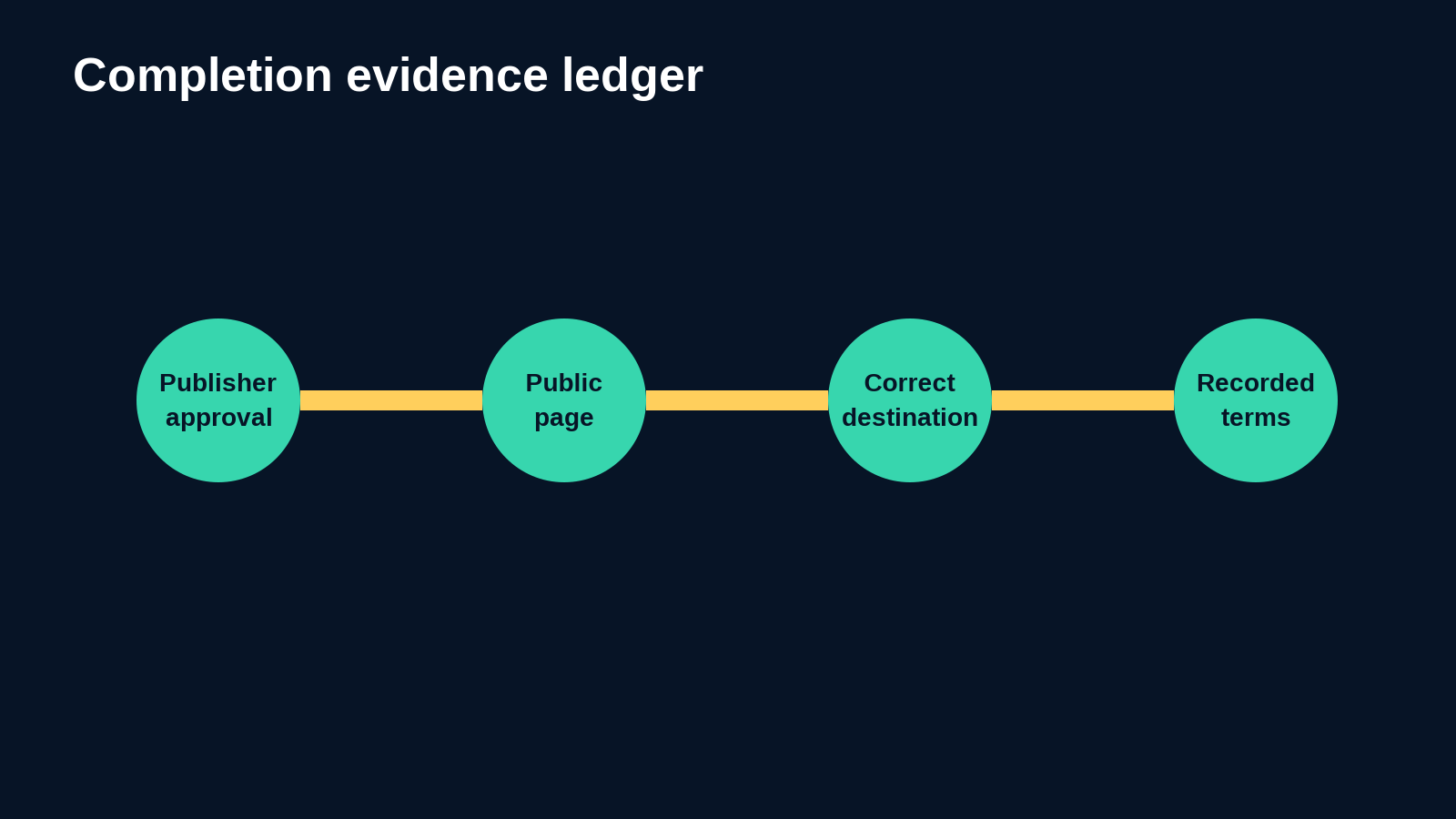
A completed transaction needs public-page evidence, not only a status change.
Continue monitoring for the agreed period. The post-publication monitoring workflow shows how to distinguish a minor edit from a removed link, inaccessible page, replaced destination or materially changed context.
Run a fair pilot
Use one destination and one written brief. Review the same number of candidate articles in both systems. Measure time to shortlist, contextual fit, evidence clarity, publisher response, effective cost, revision effort and verified outcomes.
For Linktopia, include the work required to earn credits. For Linkpool, include campaign funding and publisher price. Do not compare only the subscription price, credit balance or displayed placement amount.
Final recommendation
Linkpool is the more natural choice for agencies that want client campaigns, matched article opportunities, explicit publisher negotiation and payment-based fulfilment records. Linktopia is the more natural choice for founders and publishers willing to participate in an earn-to-spend community and contribute editorial inventory while requesting links of their own.
The strongest decision is campaign-specific. Use the model that your team can operate transparently, and keep the same relevance, editorial-control and verification standards regardless of how value changes hands.
Frequently asked questions
Is Linktopia a paid backlink marketplace?
Linktopia publicly describes a community credit model with free and paid membership options. Members can earn credits by fulfilling requests and spend credits on their own requests; its site also says credits may be bought or sold.
Does Linkpool require publishers to give links before requesting links?
No. Linkpool’s advertiser and publisher workflows use campaign opportunities and monetary pricing rather than an earn-to-spend requirement.
Is a credit value the same as link quality?
No. A value estimate can support pricing, but reviewers still need to assess the actual article, audience, destination, wording, disclosure and terms.
Can a company use both platforms?
Yes. Maintain one ledger, avoid duplicate requests and network patterns, and apply the same editorial approval and verification process to every placement.