
Linkpool vs iCopify: Matching Opportunities or Browsing Inventory?
Linkpool is a backlink marketplace that begins with campaign context and relevant opportunities in publisher articles. iCopify also organises transactions between buyers and publishers, but presents a self-serve marketplace where buyers browse and filter listed websites, send briefs and receive a live URL after publication.
That difference affects research time, evidence review and publisher communication. A large inventory can increase choice. A matching workflow can reduce the first round of prospecting. Neither approach makes every candidate appropriate, and neither removes the need to inspect the real website and final page.
The decision in one paragraph
Choose Linkpool when you want a platform that brings article-level candidates into a publisher-controlled approval workflow. Choose iCopify when you want to browse a broad marketplace of guest-post and backlink opportunities with listing metrics, visible prices and order tracking.
Use the same written campaign brief for both. Otherwise, you may compare a carefully reviewed match with a loosely filtered catalog and mistake preparation quality for product quality.

Matching and browsing are different routes to the same editorial decision.
Build a neutral campaign brief
Define the target reader, destination URL, useful topics, excluded categories, acceptable countries and languages, budget range and evidence requirements. Describe what the destination genuinely helps with. Avoid promotional claims that a publisher cannot independently support.
Then decide whether the campaign needs an existing-content placement, a new guest post or either format. iCopify publicly positions itself around guest posts, backlinks and content sourcing. Linkpool’s core workflow is article-level opportunity matching. The exact deliverable should be clear before price comparison begins.
Discovery: shortlist versus catalog
iCopify says buyers can browse listed websites and use filters based on reach and authority data. Its public workflow describes configuring a brief with drafts, anchors, target URLs and instructions, followed by publisher approval and live-link delivery.
Linkpool retrieves potential publisher articles using campaign context, then presents opportunities for review. This may reduce broad inventory scanning, especially for destinations with a specific use case. The advertiser must still read the article, and the publisher decides whether the addition fits.
A catalog can be valuable for niche, language and regional coverage. Matching can be valuable when a team wants to review a smaller page-level set. Agencies may use both approaches, but they should maintain one ledger to prevent duplicate outreach and inconsistent prices.
Evidence: understand what every number describes
iCopify’s public materials mention listing-level Ahrefs metrics and historical performance indicators such as completion, response and index success. Confirm which indicators are visible for the exact listing, how they are calculated and when they were refreshed. Platform performance history and site authority metrics answer different questions.
Linkpool can incorporate publisher-connected Search Console evidence when available. Confirm the property scope and reporting period. Search clicks for a domain are not page-level clicks, and historical clicks are not a promise of future visits.
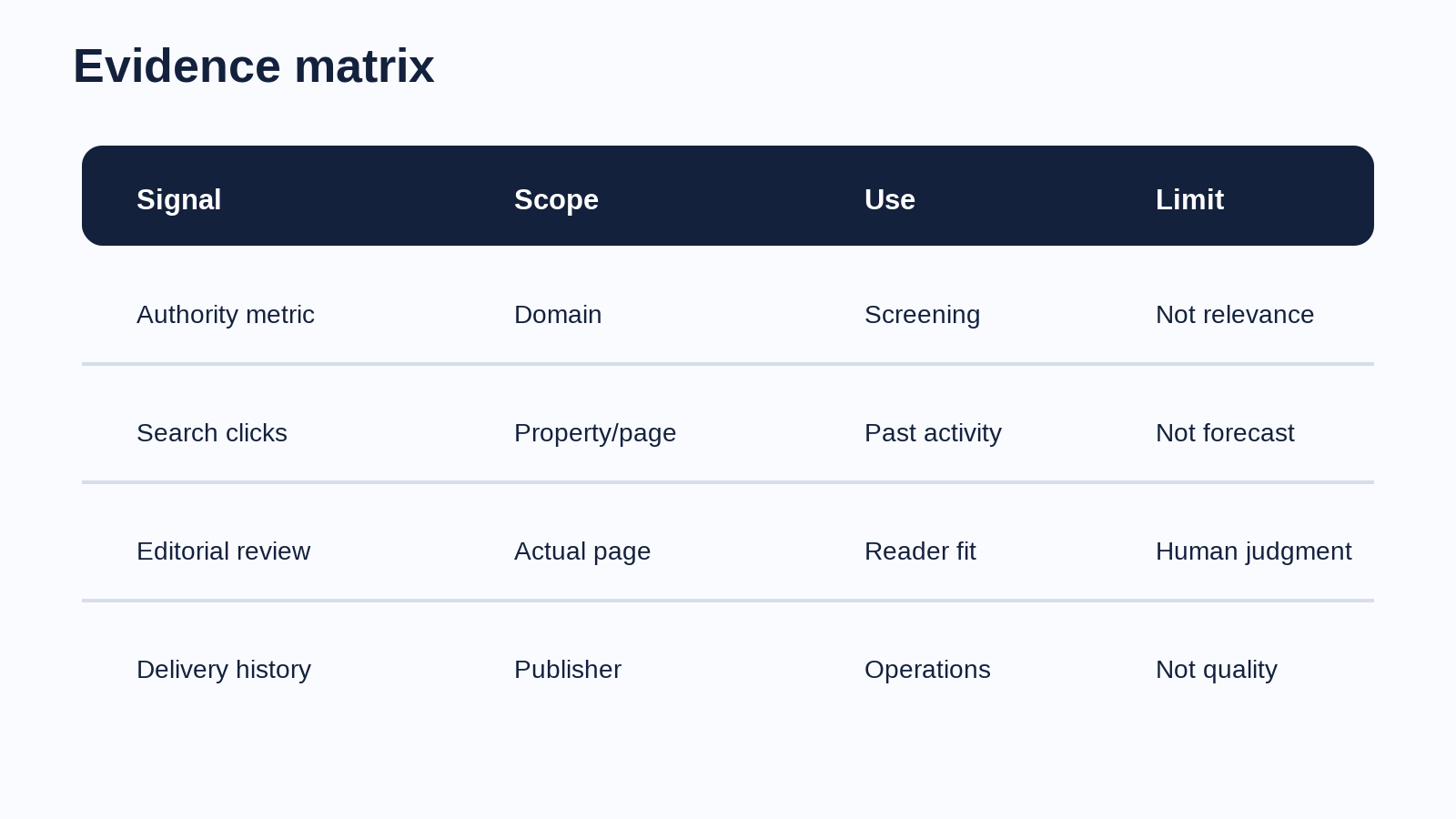
Keep each evidence type in its own lane before making a decision.
Open the publication and inspect recent content. Look for consistent subject matter, real authorship, useful editing, clear commercial treatment and sensible outbound references. The high-quality contextual placement guide explains why reader value and accurate wording matter alongside measurable signals.
Price: visible does not mean comparable
iCopify promotes fixed, visible prices and escrow. Linkpool’s workflow allows publishers to accept, counter or decline a proposed opportunity. A fixed guest-post price and a negotiated contextual insertion may cover different work.
Normalize the deliverable. Record whether writing, editing, images, publication, revisions, platform fees, taxes, monitoring and expected duration are included. Count the agency time required to search, shortlist, communicate, review and document the result.
The link insertion pricing guide offers a framework for comparing contextual relevance, page evidence, editorial effort and commercial terms without treating one metric as a price formula.
Escrow: define the release event
iCopify says payments are held in escrow until the link is live and returned to balance if an order misses its deadline. Linkpool also structures payment around an agreed placement and verification. Read the current terms for each platform and identify what counts as completion.
“Live” should mean more than receiving a URL. The correct public page should load while signed out, contain the agreed context and link to the approved destination. Determine who can raise a dispute, what evidence is required, how revisions are handled and what happens if a page changes later.
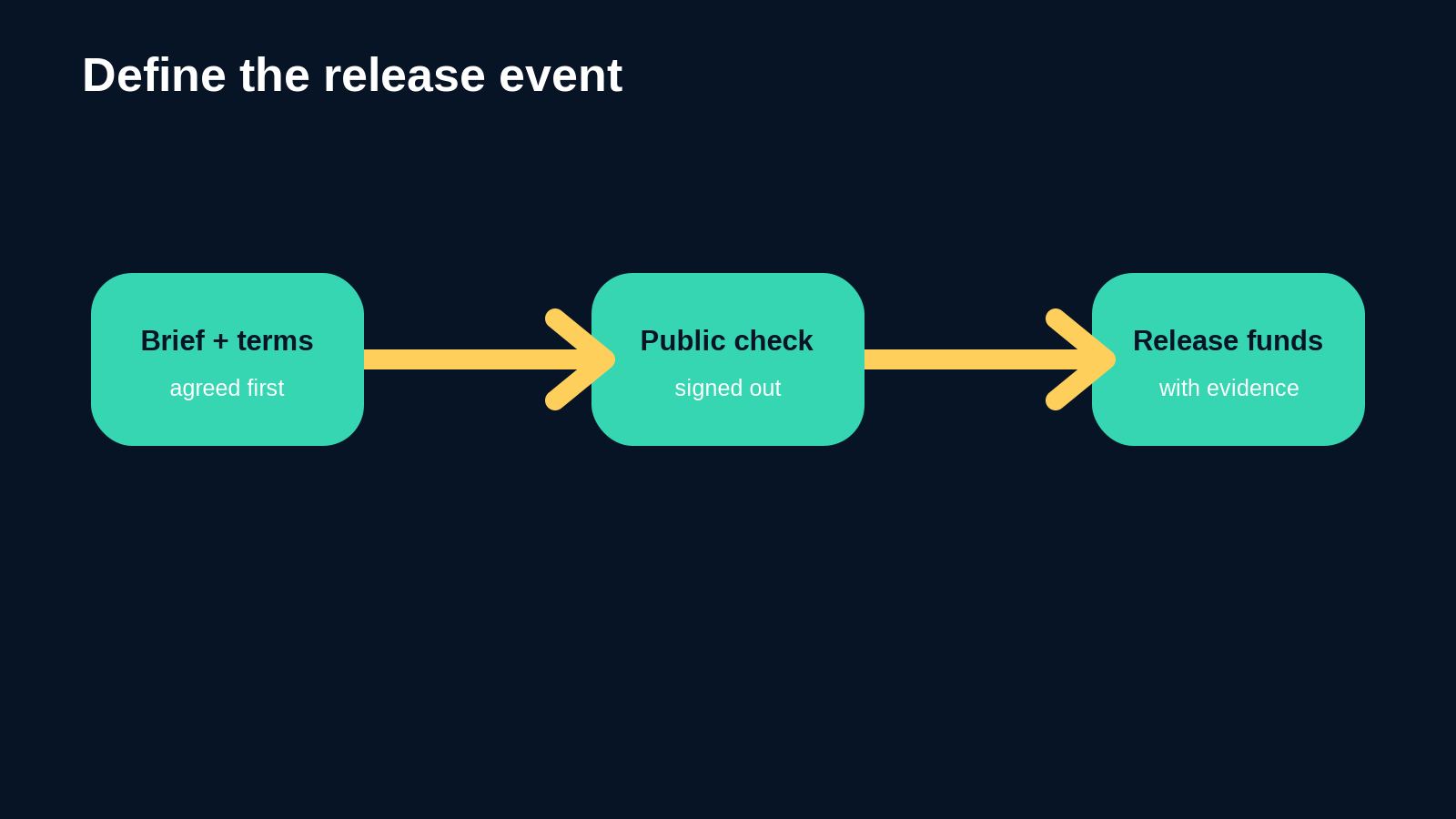
Define acceptance evidence before funds are released.
Content and editorial control
A guest-post brief should explain the intended audience, article angle, factual boundaries, destination purpose, disclosure and claims to avoid. If the advertiser supplies a draft, the publisher should still edit or reject it. If the publisher writes, the advertiser should confirm factual accuracy without turning editorial review into forced promotional copy.
For an existing-content placement, inspect the full paragraph and nearby headings. The link must add relevant information without changing the author’s meaning. The contextual anchor-text review helps teams avoid awkward exact-match language and misleading destination descriptions.
iCopify says publishers approve articles and buyers communicate with publishers. Linkpool lets publishers accept, counter or reject opportunities. Test how much context each party sees in the current interface and whether the record preserves agreed wording and terms.
Verification and maintenance
After publication, store the campaign, publisher, source page, destination, anchor, price, approval record, publication date and verifier. Check the page while logged out and follow the destination through redirects. Confirm any agreed disclosure and link attribute.
Schedule a later review instead of assuming the placement remains unchanged. The monitoring guide for live placements explains how to document removal, redirect changes, access restrictions and rewritten context.
How to compare with a controlled test
Choose one destination and one brief. Review five candidates from each platform, then record how many survive page-level editorial review. Measure staff time, suitable opportunities, response clarity, total cost, revision effort and verified live outcomes.
Do not compare only inventory size. Large inventories are useful when they contain relevant publishers you can evaluate. A matching system is useful when its shortlist is accurate enough to reduce research without hiding the evidence.
Which platform fits which team?
Linkpool fits teams that want article relevance and publisher negotiation to appear early in the workflow. iCopify fits teams that prefer self-serve catalog exploration, listing metrics, fixed visible prices and tracked guest-post or backlink orders.
The best choice may vary by campaign. Apply the same editorial threshold everywhere, record why each placement was accepted and reject candidates that do not help the reader.
Frequently asked questions
Is iCopify only for guest posts?
iCopify publicly presents guest posts, backlinks and content sourcing. Confirm the exact formats available for a selected listing before ordering.
Does escrow guarantee a good placement?
No. Escrow can structure payment, but it cannot establish relevance, editorial quality or search results. Define the completion evidence and review the final public page.
Which platform offers more websites?
iCopify publicly promotes a large listed inventory. Inventory count alone does not identify the best page for a specific destination; review the exact candidates available to your campaign.
Can agencies use both?
Yes. Maintain one campaign ledger, use the same approval checklist and prevent duplicate contact or conflicting terms with the same publisher.