
Linkpool vs Adsy: Article Matching or Guest-Post Ordering?
Linkpool is a backlink marketplace that connects advertiser campaigns with relevant publisher articles and gives publishers control over each proposed opportunity. Adsy also connects advertisers with publishers, but it starts with a guest-posting marketplace where an advertiser filters available sites and orders content placement or content creation and placement.
The practical choice is therefore not simply “which platform sells backlinks?” It is whether your campaign should begin with an existing article that already has contextual relevance or with a website selection and a new guest-post task. Public features, inventory and commercial terms can change, so confirm the current interface and applicable terms before ordering.
Quick answer
Choose Linkpool when you want a platform centred on article-level opportunities, publisher negotiation and verification of the agreed placement. Choose Adsy when you want to filter a marketplace of websites, submit a guest-post task and either provide content or request content creation and placement.
Neither workflow removes editorial responsibility. The advertiser must provide an accurate destination and a useful brief. The publisher must decide whether the proposed topic, article or insertion belongs on the publication.

One route begins with an existing article; the other begins with a guest-post order.
Start with the deliverable, not the domain score
Before opening either platform, define the result you actually need. A contextual reference in an established article is different from a newly commissioned guest post. The first depends on the quality and continuing relevance of an existing page. The second depends on the quality of the brief, writing, editorial review and publication.
An existing article may be appropriate when it already discusses the problem solved by the destination. A new guest post may be appropriate when the publication has the right audience but no suitable page yet. Do not force an insertion into unrelated text, and do not commission a thin article whose only purpose is carrying a commercial link.
The guide to how contextual link placements work explains the page-level review needed before adding a reference to existing content.
Compare discovery models
Adsy publicly describes a filter-led workflow. Advertisers can select sites using signals such as domain metrics and traffic, then choose where to submit a guest post. Publishers list websites, pass moderation, set prices and categories, and receive tasks for content placement or content creation and placement.
Linkpool’s workflow starts with campaign context and publisher content. A possible match should identify an actual article and explain why the destination could be relevant there. That can reduce broad list building, but the suggestion is only a starting point. The advertiser still needs to read the source page, and the publisher can accept, counter or decline.
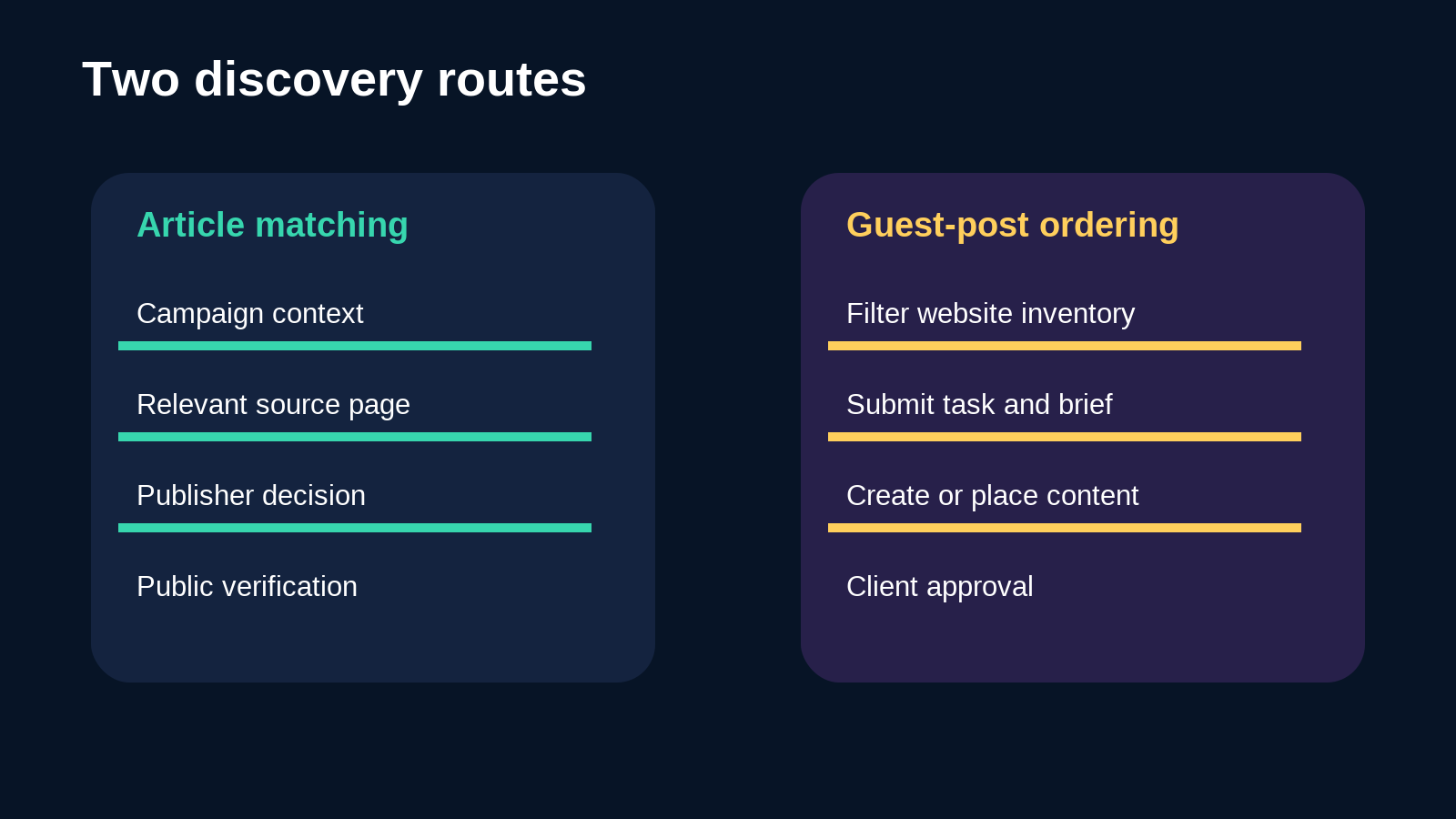
Compare where research happens and who makes each editorial decision.
Examine evidence at the correct level
Marketplace filters can help narrow a large inventory. Record which provider supplies each metric, the date it was refreshed and whether it describes a domain, subdomain or exact page. A strong domain-level number does not prove that a proposed article is relevant or that readers will see the placement.
Linkpool can show publisher-connected Search Console evidence when available. Treat it as first-party search data with a defined property and reporting window, not as a guarantee. Page-level clicks can describe past search activity, but they cannot approve wording, predict rankings or prove future traffic.
For either platform, open the actual publication. Review recent articles, authorship, subject consistency, disclosure practices, outbound links and whether commercial content overwhelms editorial value. Use the contextual placement approval checklist to preserve the reason for approval instead of relying on one screenshot or score.
Compare content responsibility
Adsy’s public publisher workflow distinguishes content placement from content creation and placement. Confirm which party writes the article, whether the advertiser can review a draft, how revisions work, who supplies images and how disclosure is handled. A complete brief should identify the intended reader, factual sources, claims to avoid, destination purpose and natural anchor guidance.
Linkpool’s existing-article workflow requires a narrower but highly contextual edit. The proposed paragraph must fit the surrounding argument, add information for the reader and avoid implying that the publisher tested or endorsed a product. The publisher should be free to rewrite or reject the suggestion.
The anchor-text review guide provides a repeatable method for checking sentence fit, destination accuracy and campaign-wide anchor patterns.
Compare price as a complete cost
Do not compare a guest-post listing with a contextual insertion as if the deliverables were identical. Record writing, editing, media, publication, revision limits, platform charges, payment processing, taxes, expected duration and monitoring. Add the internal time required to research sites, repair copy and verify delivery.
Adsy says publishers set prices and that funds are reserved after a task is accepted. Its public publisher information also describes client approval or automatic approval after a stated period. Linkpool’s workflow lets a publisher accept, counter or decline a proposed price while payment is held through completion and verification.
Check the current terms in both products. Do not assume a balance status, escrow label or platform workflow protects against every editorial disagreement or later page change.
Keep publisher choice visible
A useful marketplace should give publishers enough information to make an informed decision before work begins. The destination, requested deliverable, topic, anchor guidance, timing, commercial treatment and price should be visible. Publishers should be able to decline unsuitable categories and edit language that conflicts with house style.
Adsy states that publishers can check whether a task fits and accept it when appropriate. Linkpool makes acceptance, counteroffers and rejection part of the opportunity workflow. In either case, practical control depends on what the current order screen and agreement actually show.
Verify delivery independently
An order marked complete is not sufficient evidence. Open the public URL while signed out. Confirm that the article loads, the agreed destination resolves correctly, the wording is accurate and the link attributes and disclosure match the agreement. Save the source URL, target URL, anchor, price, publication date and verifier.
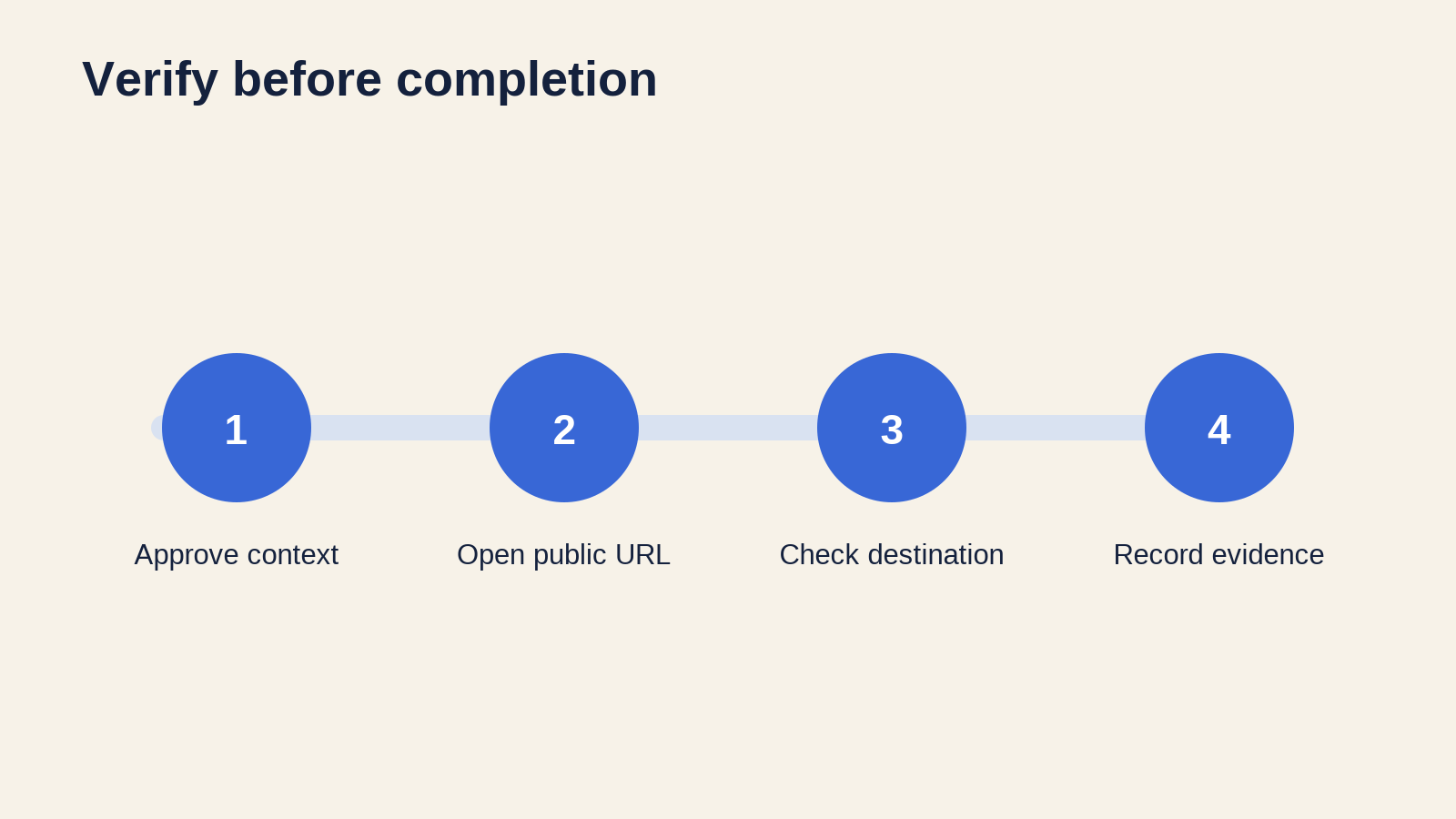
Complete the record only after checking the public page.
Continue monitoring through the expected term. The post-publication monitoring workflow separates minor edits from material changes such as a removed link, replaced destination, blocked page or rewritten context.
A fair pilot test
Run the same destination and written brief through both workflows. Shortlist three plausible opportunities, normalize the full cost and record the staff time required. Score contextual fit, evidence clarity, publisher control, content quality, commercial transparency and verifiable delivery.
Do not count the number of websites returned as the only measure. A smaller group of defensible opportunities can be more useful than a large list that creates hours of manual rejection.
Final recommendation
Linkpool is the more natural choice when the campaign should begin with a relevant existing article and a publisher-controlled placement discussion. Adsy is the more natural choice when the campaign calls for browsing website inventory and ordering guest-post placement or writing-plus-placement.
The stronger workflow is the one your team can review honestly. Use one approval standard, keep complete records and reject any placement that stops making sense when the platform branding is removed.
Frequently asked questions
Is Linkpool the same as Adsy?
No. Both connect advertisers and publishers, but Linkpool emphasises article-level matching and negotiated contextual opportunities, while Adsy publicly emphasises website filtering and guest-post tasks.
Can either platform guarantee rankings?
No responsible marketplace comparison should promise ranking improvement from one placement. Search performance depends on many factors outside a marketplace order.
Should advertisers provide their own article?
That depends on the selected service and publisher requirements. Confirm who writes, who edits, what can be revised and who approves the final publication.
What should be verified after publication?
Check public accessibility, the source and destination URLs, surrounding wording, anchor, disclosure, link attributes and any agreed duration or monitoring terms.