Sponsored Link Attributes for Paid Placements
When a paid placement is arranged through a backlink marketplace, the publisher should decide how the outbound link will be qualified before approving the sentence. Google says advertisements and paid placements should use rel="sponsored", with rel="nofollow" still accepted for that purpose. Put that decision in the brief so the advertiser, publisher and verifier assess the same delivery.
The short answer: prefer rel="sponsored" when compensation created the link; use rel="nofollow" when the publisher's policy uses that accepted alternative; and do not ask for an unqualified link to pass ranking credit. Link qualification is a policy signal, not a promise of rankings, traffic, indexing or sales.
The attribute does not replace editorial review. The source article, destination, anchor, disclosure, price and expected duration must still make sense together. A qualified paid link can remain irrelevant or misleading, while a useful reference still needs transparent commercial treatment when payment is involved.

Treat link qualification as part of the approved delivery, not a technical detail added after publication.
Start with the commercial relationship
Ask why the link exists. If money, services, products or another form of compensation is connected to publication, record that fact before discussing anchor text. Google's spam policies identify buying or selling links for ranking purposes as link spam, while explaining that advertising and sponsorship links can be handled appropriately when qualified with rel="sponsored" or rel="nofollow".
This boundary applies to an existing-article placement, sponsored feature, guest post, product review or another paid format. The publisher owns the source page and should decide how its policy is implemented. The advertiser can request a placement, but should not make removal of appropriate qualification a condition of payment.
Keep the language precise. "Paid placement" describes the relationship. "Relevant reference" describes editorial fit. "Sponsored attribute" describes markup. None proves that a page will rank or that a search engine will count the link as a ranking signal.
Choose between sponsored and nofollow
Google's outbound-link documentation prefers rel="sponsored" for advertisements and paid placements because it describes the relationship directly. It also says rel="nofollow" remains acceptable for flagging paid links. A publisher may use one value consistently across commercial content or select a value according to its system.
Use sponsored when you want the markup to state that compensation is involved. Use nofollow when the publisher's policy uses that accepted value or its tooling cannot yet apply the more specific value. Multiple values can be combined when they truthfully describe the link.
Do not turn this into an SEO performance comparison. Google treats these attributes as hints and can change how its systems process signals. The defensible requirement is accurate qualification and useful content, not a claim that one attribute will produce a result.
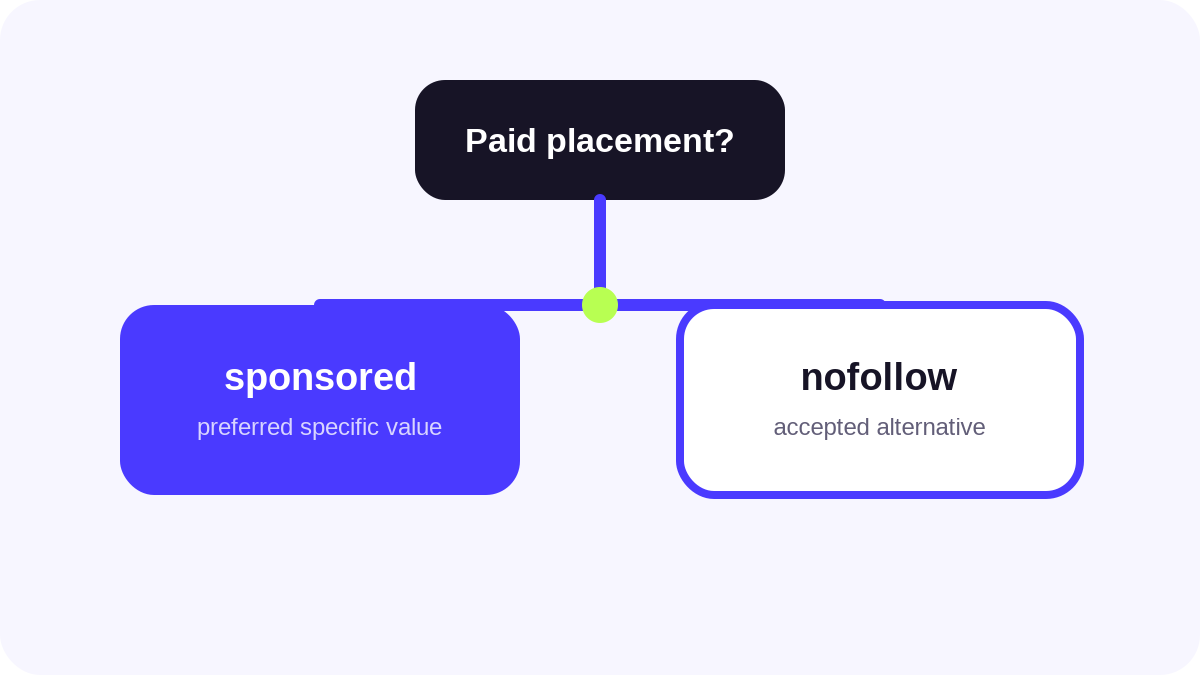
Rel="sponsored" is the preferred specific signal for paid placements; rel="nofollow" remains an accepted alternative.
Put the attribute in the placement brief
A useful brief names the source URL or intended article, destination, proposed section, complete sentence, anchor, commercial relationship, requested attribute, disclosure, price, duration and approvers. Mark fields as proposed or accepted so a suggestion cannot be mistaken for publisher consent.
The advertiser should explain reader value without demanding a keyword-heavy anchor. The publisher should confirm or edit the sentence, apply its disclosure and link policy, and identify any change requiring fresh approval. Our contextual placement approval checklist covers the broader evidence review.
If a marketplace interface shows an attribute option, treat it as a recorded request until the publisher accepts it. The public HTML is the final implementation. A dropdown value, email promise or screenshot does not prove what a signed-out visitor and crawler receive.
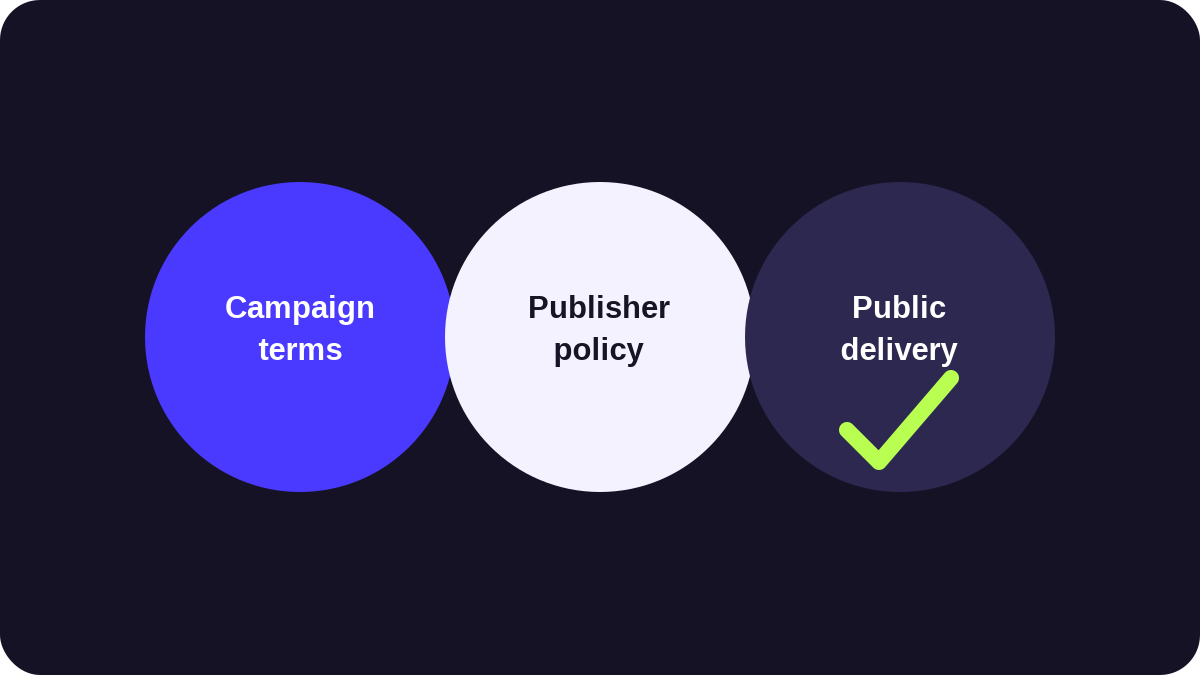
The accepted brief should connect commercial terms with the publisher's policy and the final public page.
Inspect the actual public link
After publication, open the source page while signed out and follow the link. Confirm that the final source URL is public, the anchor matches the approved meaning, the destination resolves and the surrounding paragraph remains relevant. Then inspect the anchor element in browser developer tools or page source.
In the anchor element, the rel value should appear as rel="sponsored" beside the destination href. Publishing systems may add noopener or noreferrer for security or referrer handling; those values answer different questions and do not replace sponsored or nofollow. Record every rel value present rather than guessing from appearance.
Check the rendered DOM when JavaScript inserts the link. A browser inspection establishes what was delivered at that moment. It does not prove indexing, permanence or a search outcome.
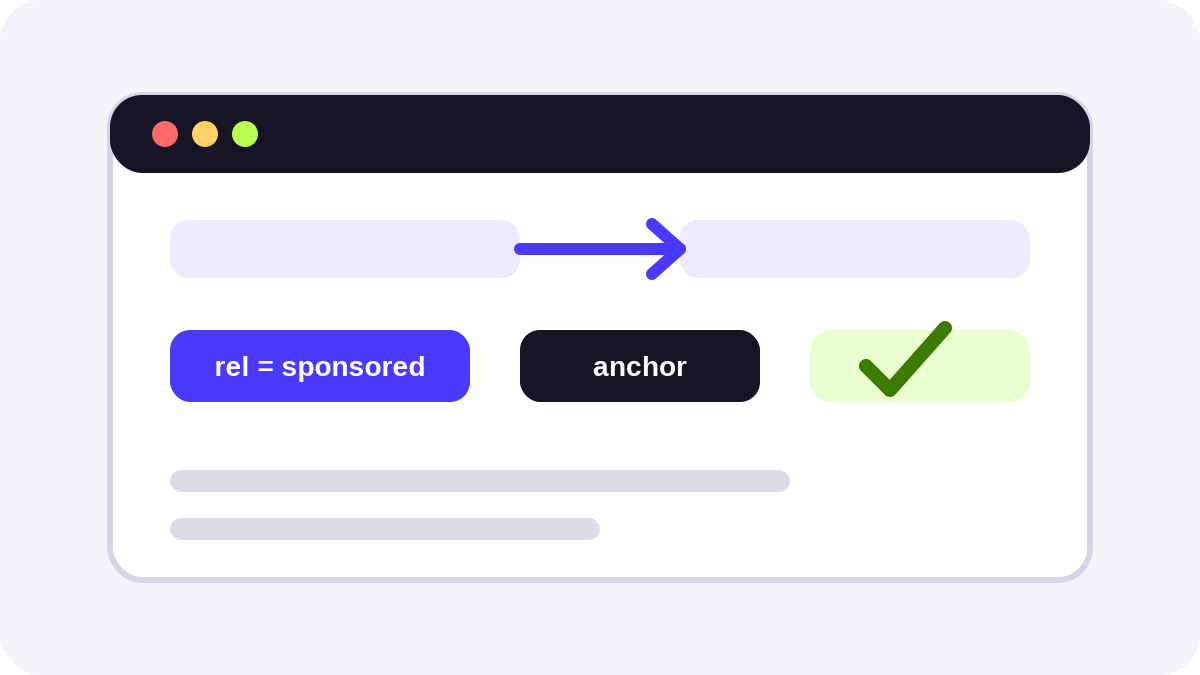
Verify the delivered anchor and rel attribute on the public page, then preserve the observation with a timestamp.
Separate qualification, anchor text and disclosure
Anchor text should accurately describe the destination. The rel attribute communicates the link's relationship to search systems. A visible disclosure tells readers that content or placement is sponsored when policy or applicable rules require it. These controls are connected, but not interchangeable.
A natural anchor does not make an unqualified paid link appropriate under Google's guidance. A sponsored attribute does not repair misleading anchor text or an irrelevant paragraph. A visible "Sponsored" label does not automatically change the HTML attribute.
Use the anchor-text review workflow to test destination accuracy, paragraph fit and unsupported endorsements. Keep the commercial qualification in the same record so an editor does not improve the sentence while accidentally changing the agreed treatment.
Record what can change
Pages are edited, content systems migrate and plugins alter HTML. Save the source URL, destination, anchor, surrounding sentence, observed rel values, disclosure, check time and expected duration. Add the person responsible for the next review and the process for reporting a material change.
Recheck after a migration, article rewrite, destination redirect or publisher notice. If the link disappears or its qualification changes, compare the public result with the accepted terms before requesting a correction. Confirm a temporary page error before treating it as removal.
The post-publication monitoring guide provides a record for access, destination, wording and commercial-treatment changes. It also keeps delivery verification separate from performance.
A compact operating checklist
Before approval:
- Identify whether compensation is involved.
- Read the exact source article and destination.
- Agree the full sentence and descriptive anchor.
- Record sponsored or nofollow treatment under the publisher's policy.
- Confirm disclosure, price, duration and approvers.
After publication:
- Open the page while signed out.
- Follow the destination and check redirects.
- Inspect the rendered anchor element.
- Save the rel values and verification time.
- Recheck material changes against the accepted record.
This process does not promise a search result. It gives both sides a repeatable way to approve a useful paid reference, qualify it transparently and verify what became public.
Frequently asked questions
Is rel="sponsored" required for every paid link?
Google prefers sponsored for advertisements and paid placements. Its documentation also says nofollow remains acceptable for that purpose. Follow the publisher's policy and record the accepted value before publication.
Does rel="nofollow" stop Google from discovering the destination?
Not necessarily. Google describes these attributes as hints, and a page can be discovered through other links or a sitemap. Do not use link qualification as an indexing control.
Can a paid link use both sponsored and nofollow?
Yes. Multiple rel values are valid. Use combinations that accurately reflect the relationship and the publisher's policy rather than adding attributes without a reason.
Is a sponsored attribute the same as a visible disclosure?
No. The HTML attribute communicates link relationship to search systems. A visible disclosure communicates with readers. Review the publisher's policy and applicable requirements for both.
Should an advertiser ask a publisher to remove sponsored or nofollow?
No. Payment should not be conditioned on removing appropriate commercial qualification. Choose placements for reader relevance, accurate wording, transparent terms and verifiable delivery rather than promised ranking credit.